What Local Conditions Do
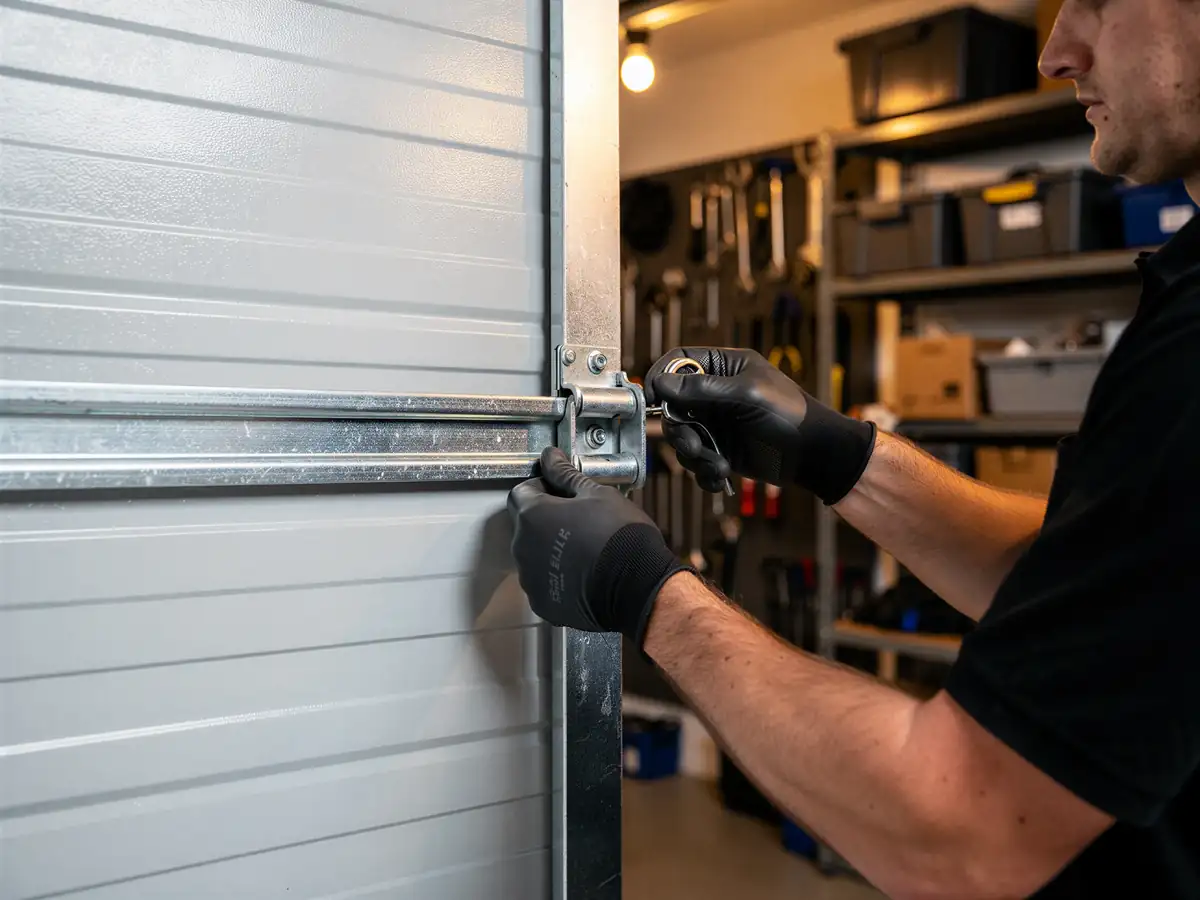
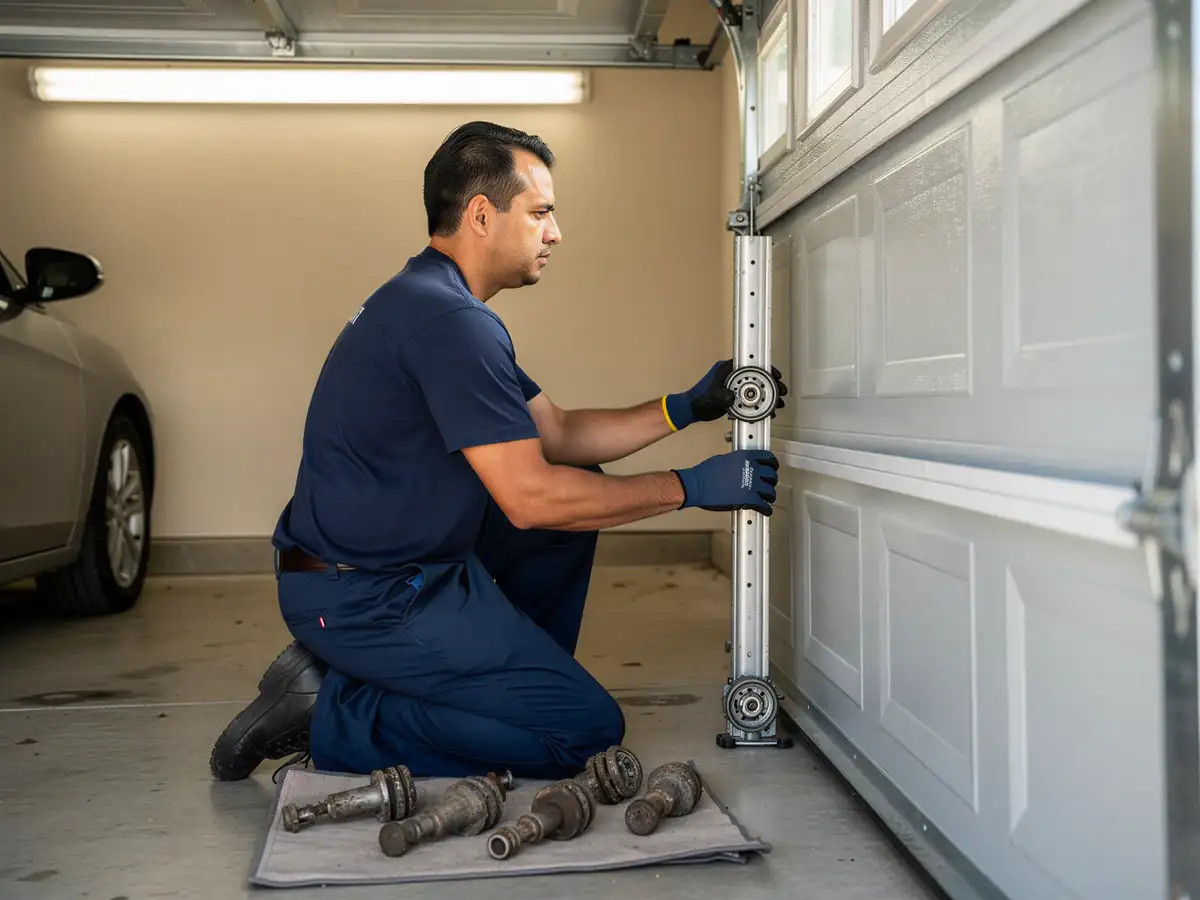
Most of the houses we get called to sit in neighborhoods built between 1975 and 2005, with the bulk of that stock going up around 1985. That matters more than people think. A door from that era usually runs on steel rollers in a galvanized track, paired with a torsion spring sized for the original door weight - not the heavier insulated replacement panels a lot of owners have swapped in since without upgrading the spring. Across the nine areas we service, that combination is the norm, not the exception.
With 6,745 owner-occupied houses among 16,599 households in this area, a large share of these setups have never been touched past a can of spray lubricant. The noises you hear aren't random. A rhythmic thump every few seconds as the door moves is a flat spot on a roller. A sharp bang usually means a cable or spring let go. A steady grinding hum points to a worn roller bearing dragging against the track. None of that is guesswork - it's just what happens to hardware this age under normal use.
We don't diagnose over the phone past this point. What a noise sounds like over a phone speaker and what it actually is are two different things, and we'd rather look at the track than guess.
The Seasonal Bit
Monroe sits in a mild band with occasional freeze mornings, not a hard winter climate
That's good news for the door itself - no deep freeze-thaw cycle cracking panels or warping wood sections the way you'd see further north. But it does something specific to 1980s-era lubrication. The grease packed into a thirty-five-year-old opener or a spring that's never been serviced thickens on the one or two genuinely cold mornings a year we get, and a door that's been quiet all October suddenly groans or hesitates at the top of its run in January.
It's not the cold doing damage
It's old lubricant behaving like old lubricant always does when the temperature drops, even briefly. Once the morning warms back up, the same door often runs quiet again, which is exactly why people put off calling - the noise seems to fix itself. It doesn't. The roller or bearing that groaned in the cold is the same one wearing down all year; the freeze morning just makes it audible. A five-minute lube-and-check before the first cold snap catches more of this than anything we do after the fact.
What Is Going On
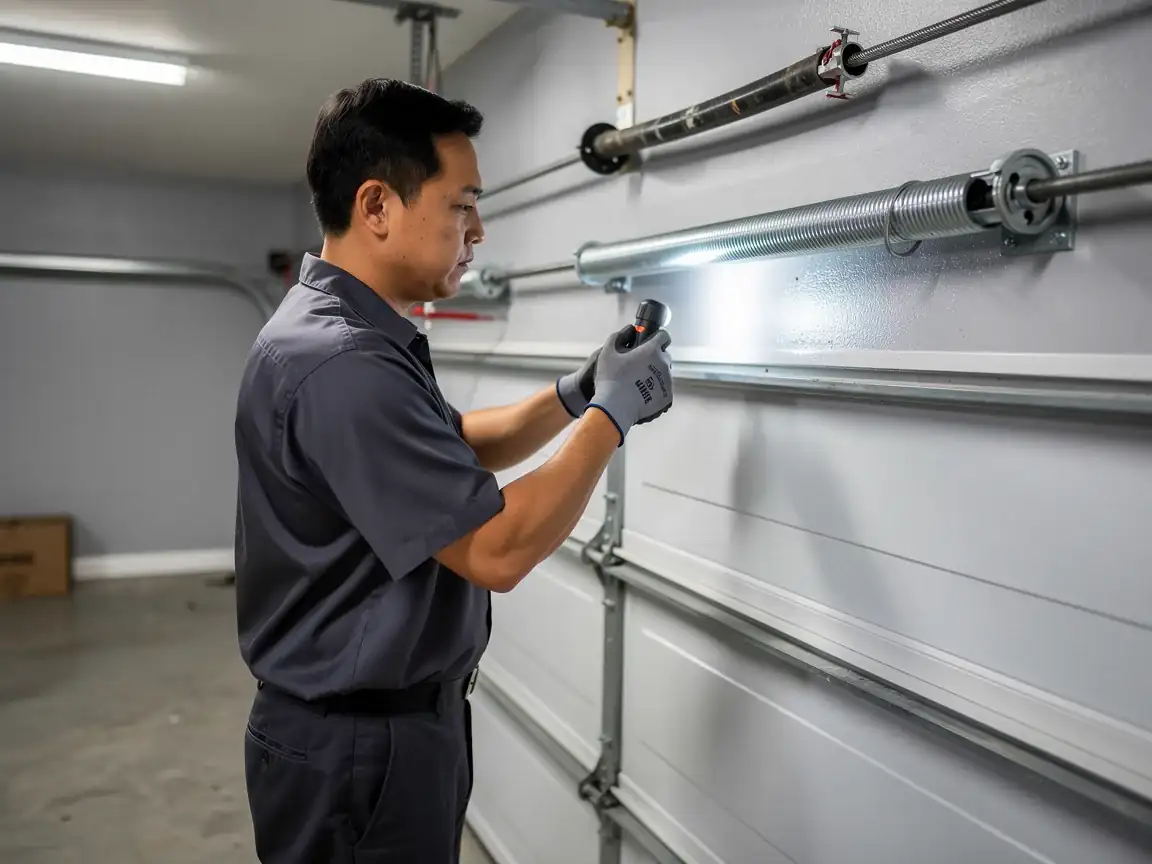
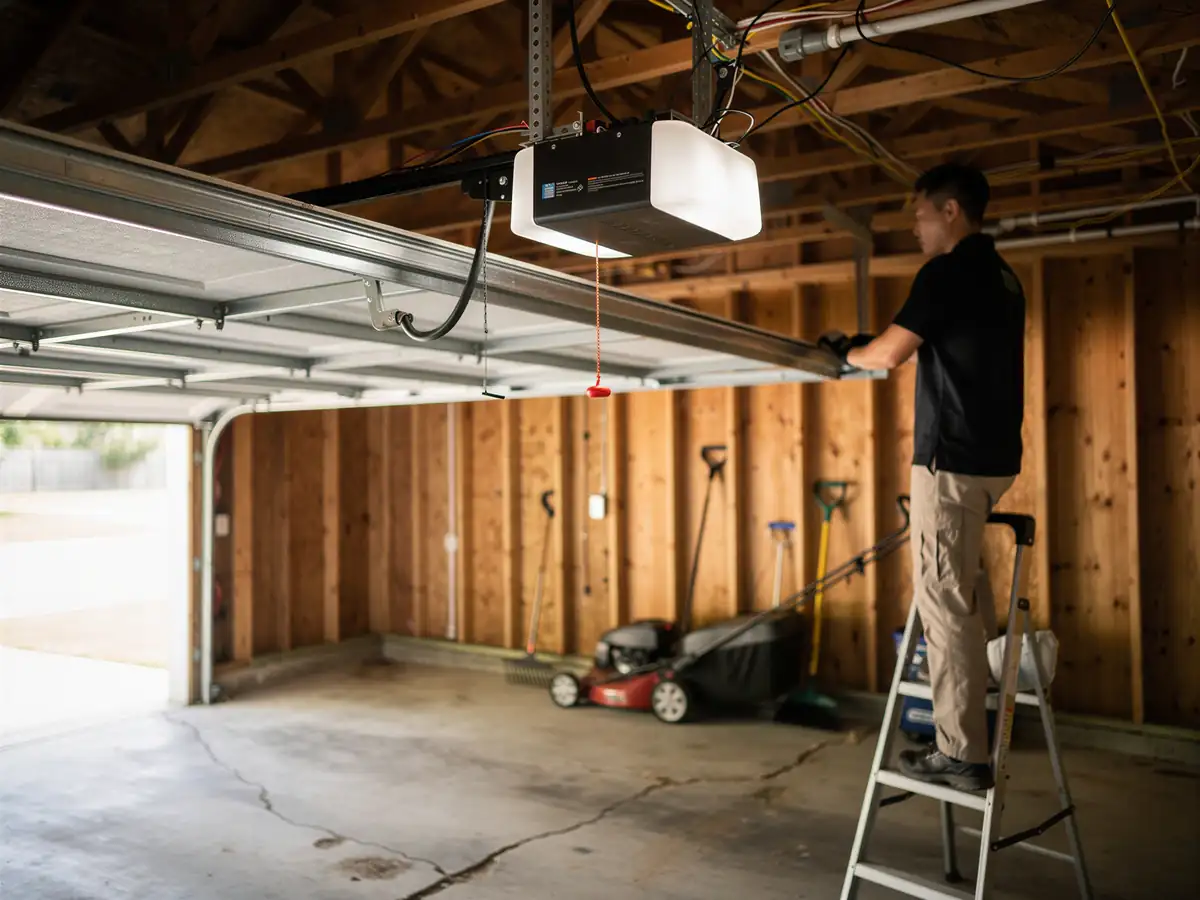
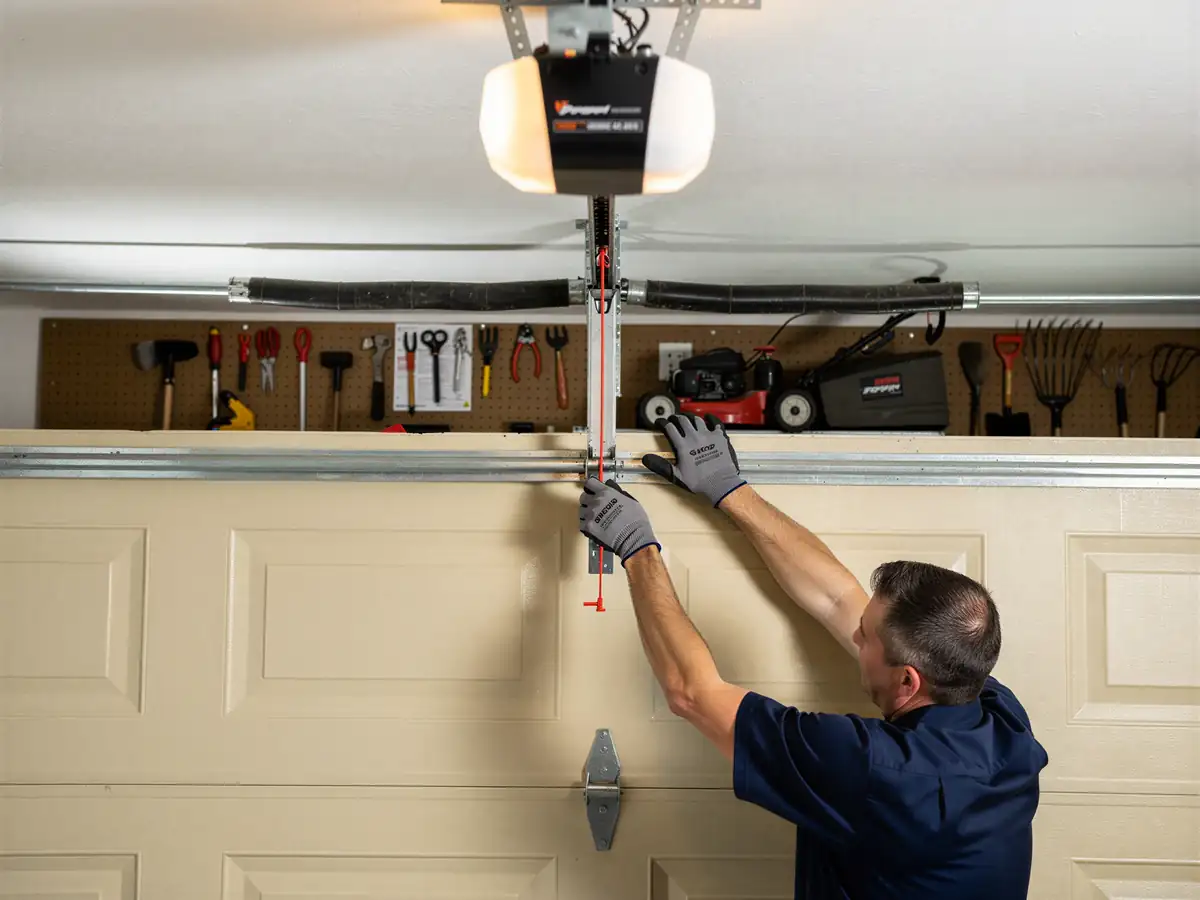
Walk out to the garage and listen for where in the cycle the noise happens. Right at the start, as the opener takes the load - that's almost always spring tension, and on original 1980s-90s hardware it's often a torsion spring that's lost a coil of life and is handing the opener more work than it's rated for. Partway through the travel, a repeating click or thump that matches the door's speed - that's a roller, and on this housing stock it's usually the stock steel roller rather than anything nylon, since nylon rollers weren't standard equipment on doors from that build period.
A squeal at the very top, right before the door stops, points to the limit switch or the top roller binding in a track that's shifted slightly out of plumb over thirty-plus years of settling - not unusual in houses from this era. A loud single bang, as opposed to a repeating sound, means something broke: a cable, a spring, or a bracket. That one stops being a maintenance call and becomes a safety call, because a door held up by one cable instead of two is a door that can fall.
We can usually tell which of these it is from the sound alone once we're standing in the garage, but we won't quote a fix sight unseen.
What You Pay
We don't post flat prices here because spring size, door weight, and how far gone the hardware is all change the number, and guessing at it before we've seen the door does nobody any favors. What we can tell you is how we think about the repair-versus-replace call. With median household income across this area at $46,663, most of the owners we talk to aren't looking to redo the whole door - they want the one broken part fixed and the rest left alone, and on a door from the 1975-2005 stock that's usually the right call. Springs, rollers, and cables are serviceable on their own.
Where it stops making sense is a door where the track is bent, the panels are rusted through, or the opener is original and the control board is failing alongside the mechanical parts - at that point you're paying to patch something that's going to need the next part replaced in six months anyway, and a straight replacement ends up cheaper over a couple of years. That's a judgment call we make in person, not over the phone, and it's one honest limitation worth saying up front: we'd rather tell you a repair isn't worth it than sell you one.