What Local Conditions Do
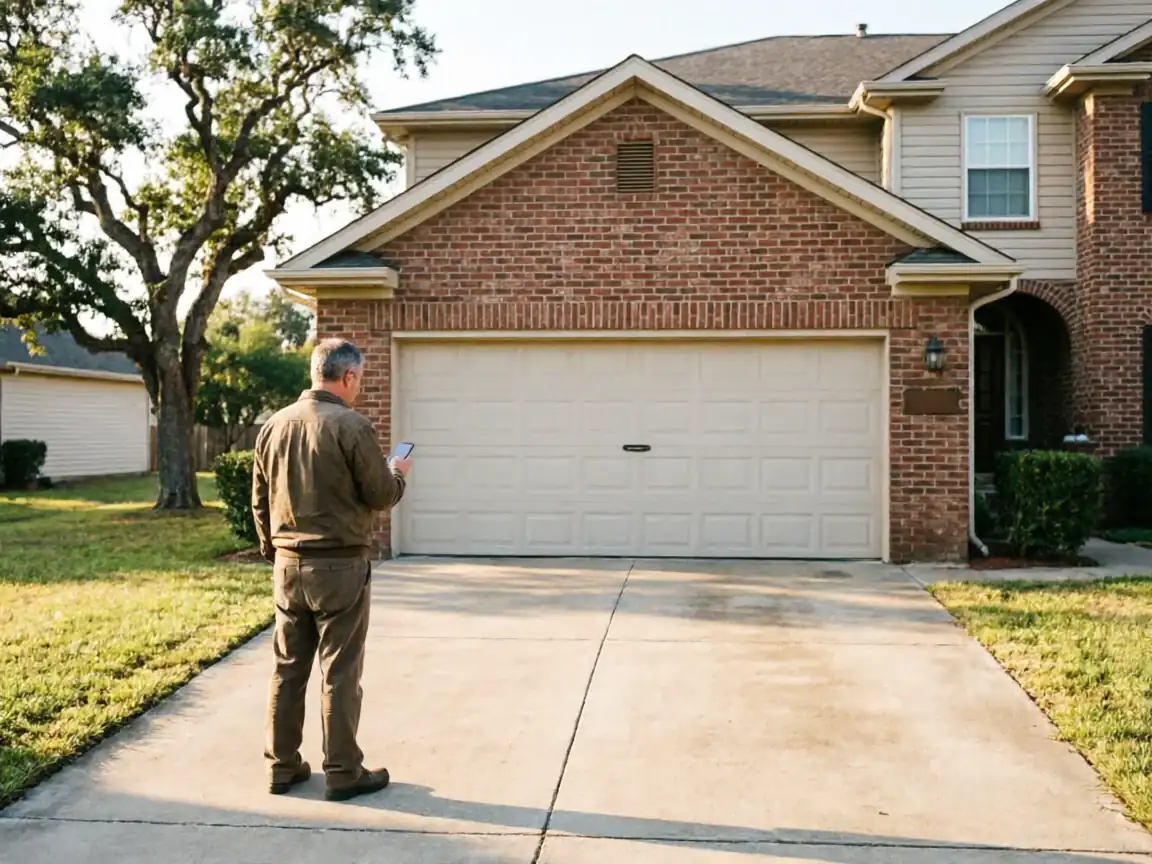
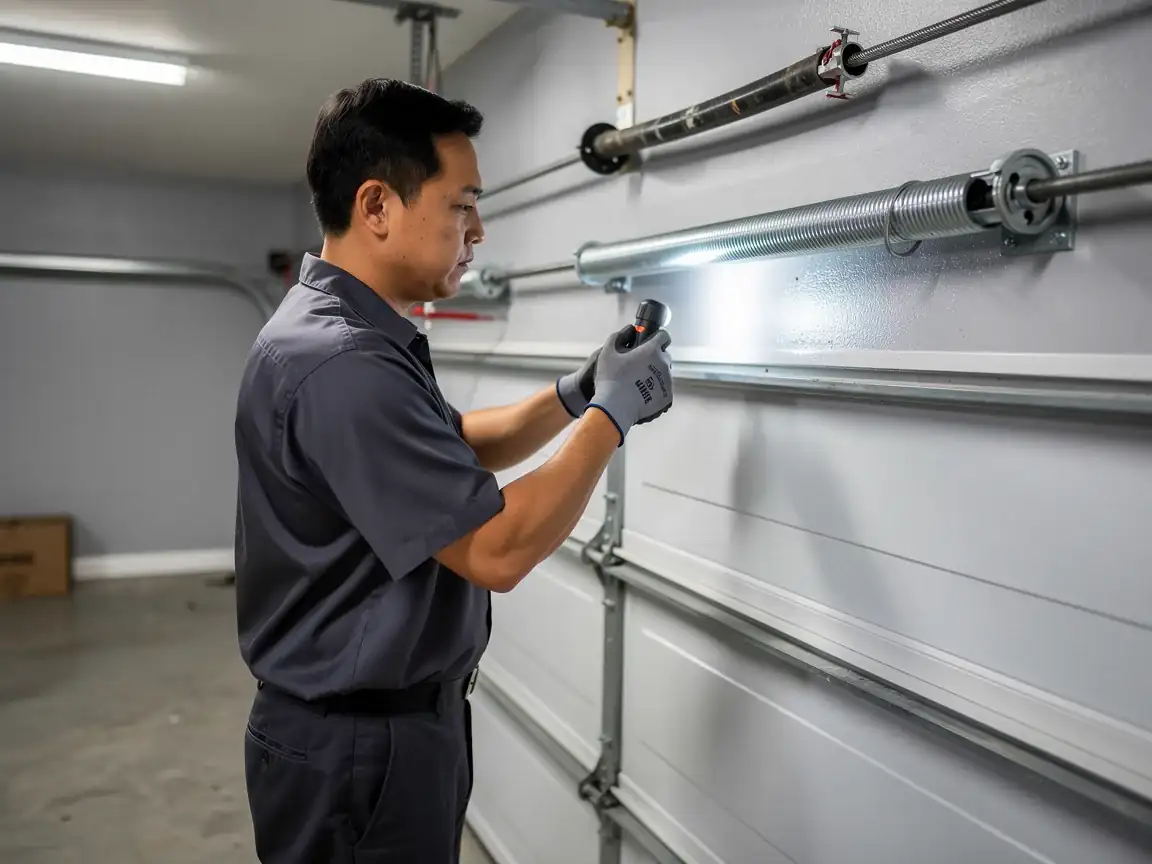
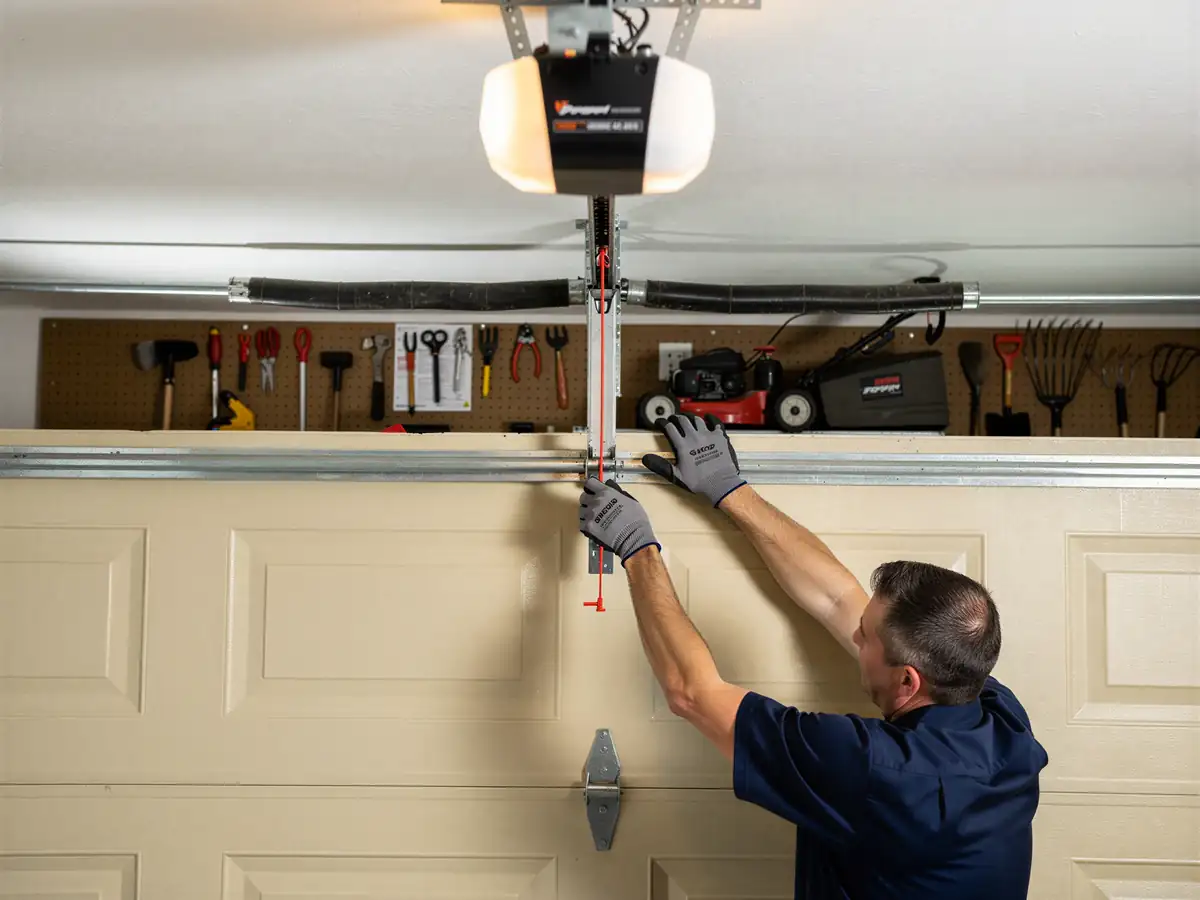
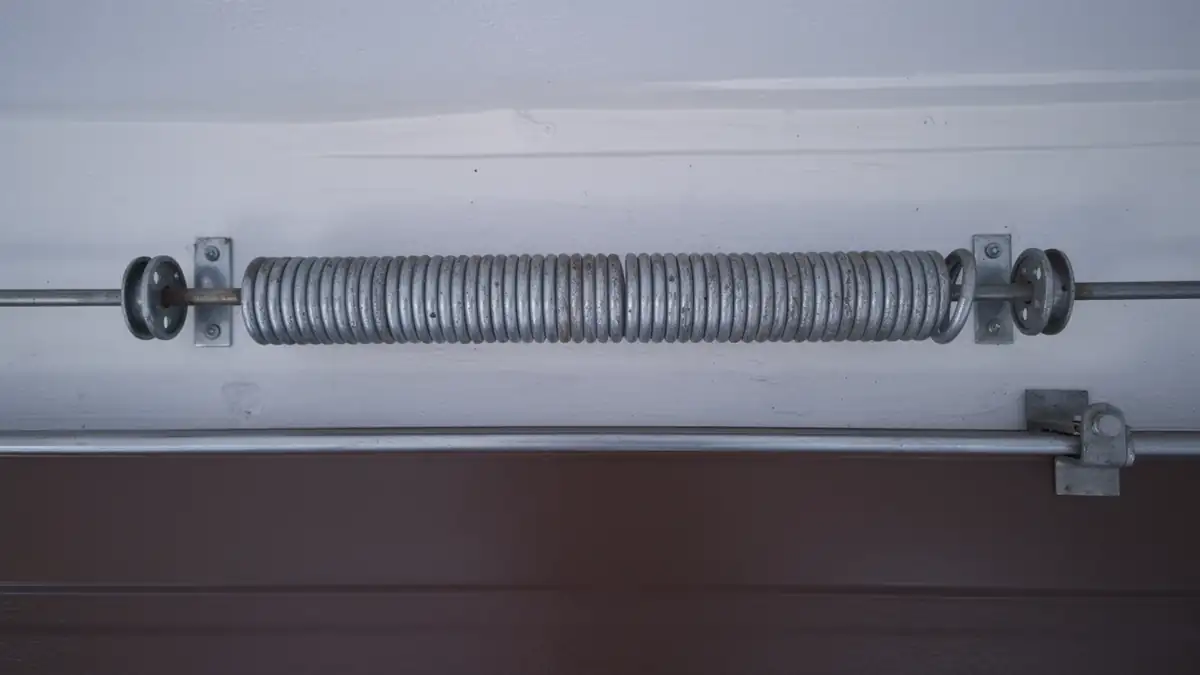
Monroe's housing mostly went up between 1975 and 2005, with the median build year landing around 1985. Across the nine named areas we work in, that stretch is dominated by 1980s and 90s construction - which matters more than people think, because that's the exact window when torsion spring setups became the standard over the older extension-spring, ceiling-mounted designs. If your house falls in that build window, you've likely got a torsion system on the header above the door, not an extension spring running along the horizontal track. That changes what parts fit, what the repair looks like, and whether a tech needs to bring a second spring size on the truck.
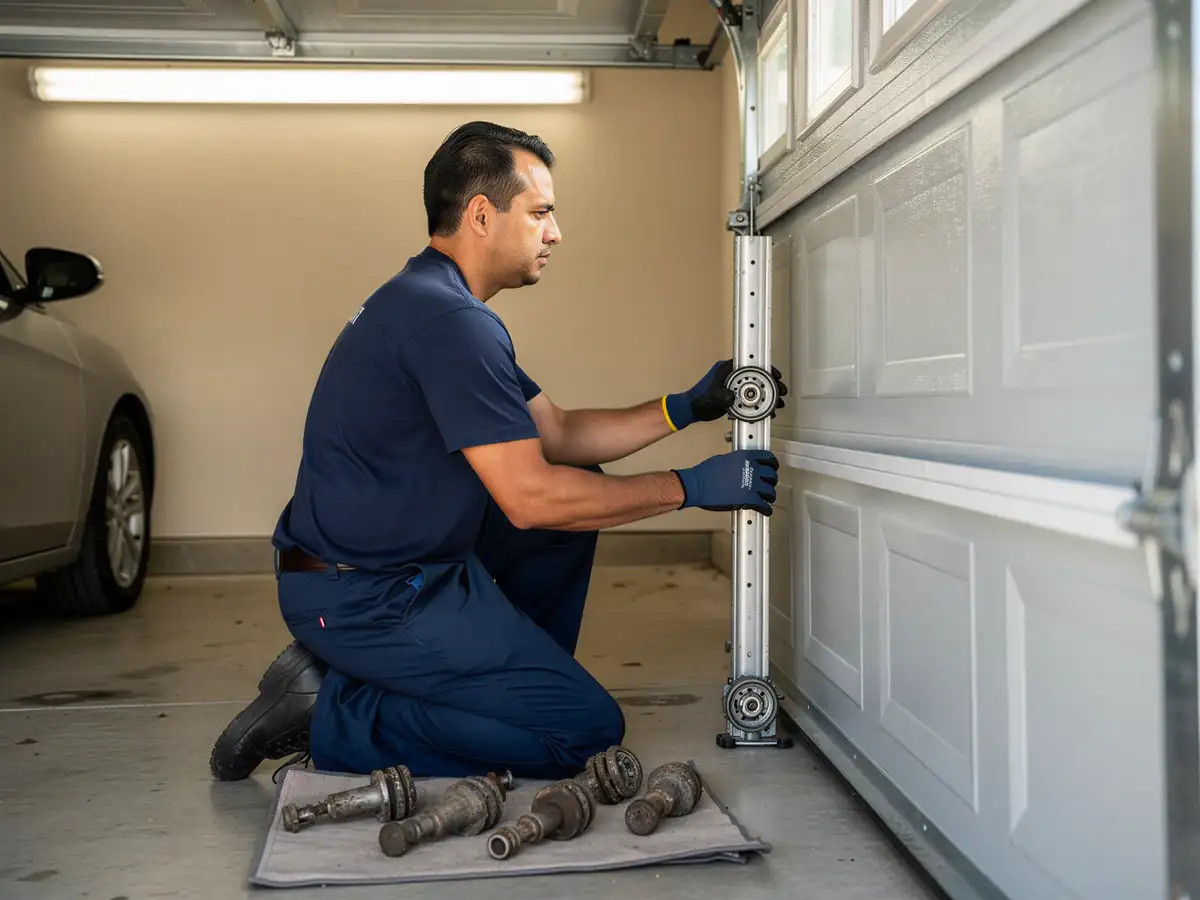
A house built in 1985 is now 40 years old. Original hardware from that era - the spring itself, the end bearings, sometimes the whole torsion tube - is well past its rated cycle count even if nobody's touched it. We see doors in the older pockets of that 1975-2005 window where the spring has never been swapped once. That's not a knock on the door. Springs are rated in cycles, not years, and a door that gets used twice a day for four decades has put a lot of wear on parts that were never meant to last forever.
The Seasonal Bit
Monroe sits in a mild band with some freeze risk
We're not getting weeks of hard winter, but we do get mornings cold enough to stiffen steel. A torsion spring that's already fatigued from 30-40 years of cycling is exactly the kind of part that lets go on one of those colder mornings, not because the cold causes the break on its own, but because cold steel is less forgiving of metal fatigue that's already built up. The spring doesn't know the difference between October and January until it's already weak, and then a cold snap is what finishes the job.
- 40 years
This is why the calls cluster the way they do
A handful of sharp-cold mornings a year, hitting a housing stock where a lot of the original springs from the 1975-2005 build era are still in service. If your door has never had the springs replaced and the house is from that window, you're carrying 40-plus-year-old steel into every cold front that comes through. We're not telling you to replace a spring that's working fine. We're telling you that if it's original to a house from the 80s, it's closer to the end than the beginning.
What Is Going On
We work across nine named areas in the Monroe service footprint, and the pattern holds pretty evenly through all of them - this isn't a newer-subdivision-versus-older-neighborhood split, it's a whole-market thing tied to when the region built out. West Monroe sits about 4 miles off, Richwood and Brownsville around 5, Swartz and Claiborne around 7 - close enough that the same 1975-2005 build pattern and the same mild-with-freeze climate apply without much variation. Sterlington at 12 miles, Calhoun at 16, Collinston at 17, and Rayville at 19 start to drift further from that core window sits about 8 miles to the north-northeast.
What that means practically: if you're calling from anywhere in that radius, we're not guessing at your house's age or your door's hardware from scratch. The service area is old enough, and consistent enough in its build era, that a torsion spring job on a door from 1985 looks a lot like the next one down the street, and the one two towns over. That consistency is useful - it means parts on the truck usually match what's on your header.
What You Pay
We don't have a flat number to quote here, and we're not going to make one up. What we can tell you is who's asking: across the service area there are 16,599 households and 6,745 owner-occupied houses, with a median household income of $46,663. That's a market where most repair calls are homeowners weighing a spring replacement against buying a whole new door - not a market where people are routinely gutting and replacing openers every few years just because.
Given that income level and the age of the housing stock, the math usually favors fixing the spring or the opener logic board over replacing the whole door, unless the door itself - panels, track, rollers - is also failing from age. A door from the 1975-2005 build era that's otherwise sound is almost always a repair job, not a replacement job. We'll tell you straight if your door's past the point where a spring swap makes sense; we're not going to sell you a new torsion spring on a door whose bottom panel is rusted through.