What You Pay
West Monroe is a short run for us, four miles off our Monroe base, which keeps the drive itself from adding anything to your bill. What does affect the number is what's actually wrong and what the door needs to fix it. A snapped torsion spring on a standard door costs less than a cable that's come off a drum and taken the bottom bracket with it. We quote the job once we've looked at it, not over the phone, because guessing at a broken door over the phone is how shops end up padding invoices.
Household incomes here run around $46,663, and we price jobs the same way across every town we cover from Monroe - we don't run a different rate card for West Monroe than we do anywhere else. If a repair is going to cost close to what a new opener or a new door section runs, we'll tell you that up front instead of billing you for both a patch and a replacement later.
One limitation worth saying plainly: we don't carry every obsolete part on the truck. If your door is old enough that the track or hinge pattern was discontinued, we may need to order it, and that adds a day or two, not minutes.
How It Shows Up
Houses in West Monroe were mostly built around 1976
Which puts a lot of the original garage doors and openers well past their design life even where they've been maintained. The failure pattern we see here tracks that age: torsion springs that have simply cycled out after decades of use, rollers worn oval instead of round, and extension-spring setups on older single doors that were never upgraded to have safety cables running through the coils.
It shows up as a door that won't move at all, a door that opens a foot and stops
Or a door that comes down crooked because one spring let go and the other is still under full tension. Sometimes it's quieter than that - a grinding sound every time the door travels, or an opener that runs but the door doesn't follow, which usually means a disconnected or stripped trolley.
With 5,307 households in West Monroe, there's a wide range of how these doors have been treated over the years
But the age of the housing stock itself is the one constant. A door installed when the house was built, even if it's been serviced, is a door running original steel on original tracks, and that's a different repair than a ten-year-old door with the same symptom.
- 5,307 households
Doing It Yourself
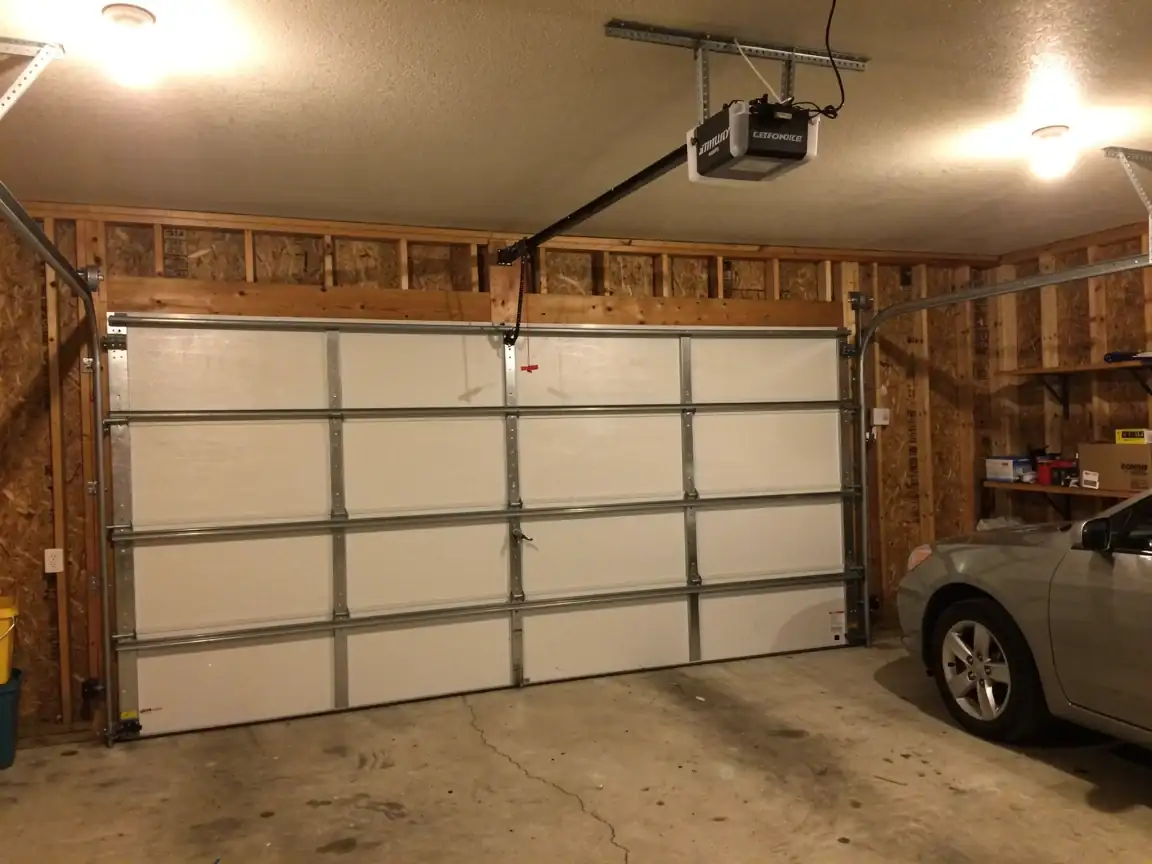
There's a short list of things worth trying before you call anyone. Check that the opener is actually getting power - a tripped breaker or an unplugged cord looks exactly like a dead opener. Look at the track for anything obviously bent or an object caught in it. If the door has a manual release cord, you can usually pull it and lift the door by hand to see if it's a spring problem or a track problem - a door that's heavy and won't stay up on its own is telling you the spring has gone.
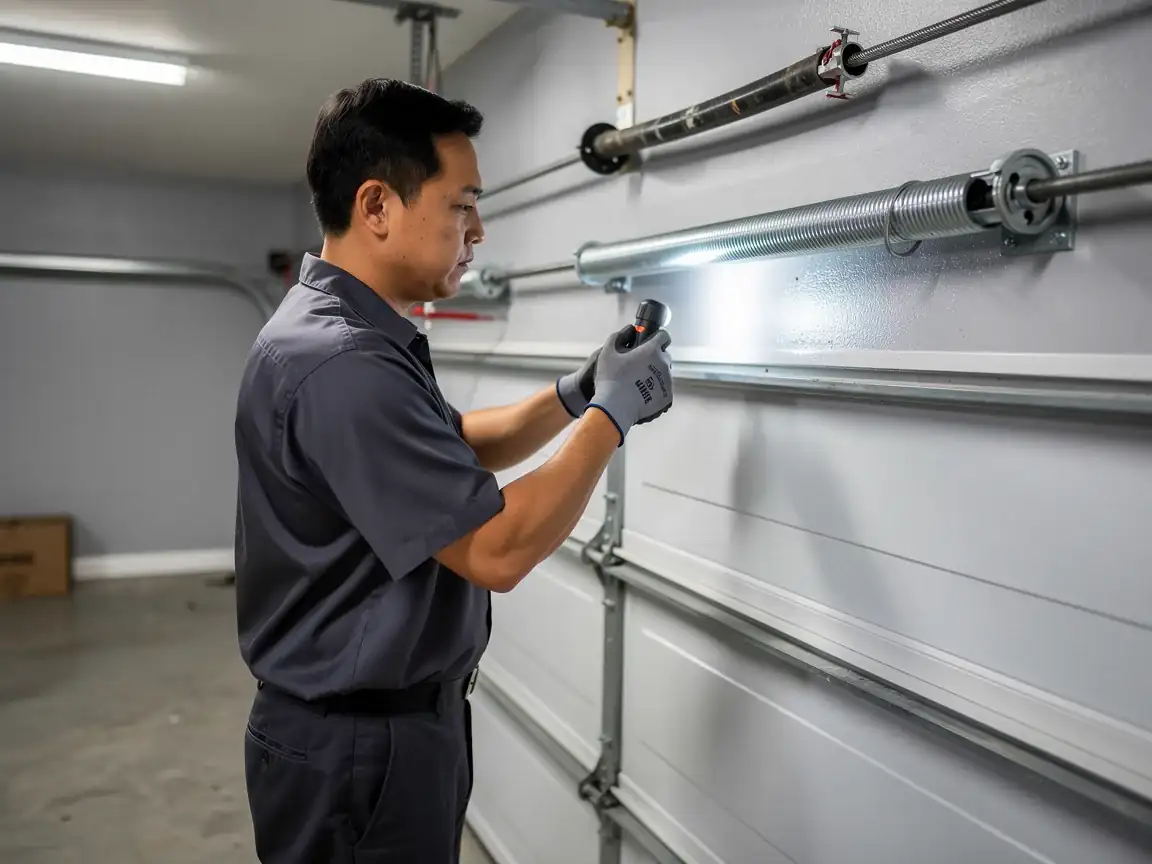
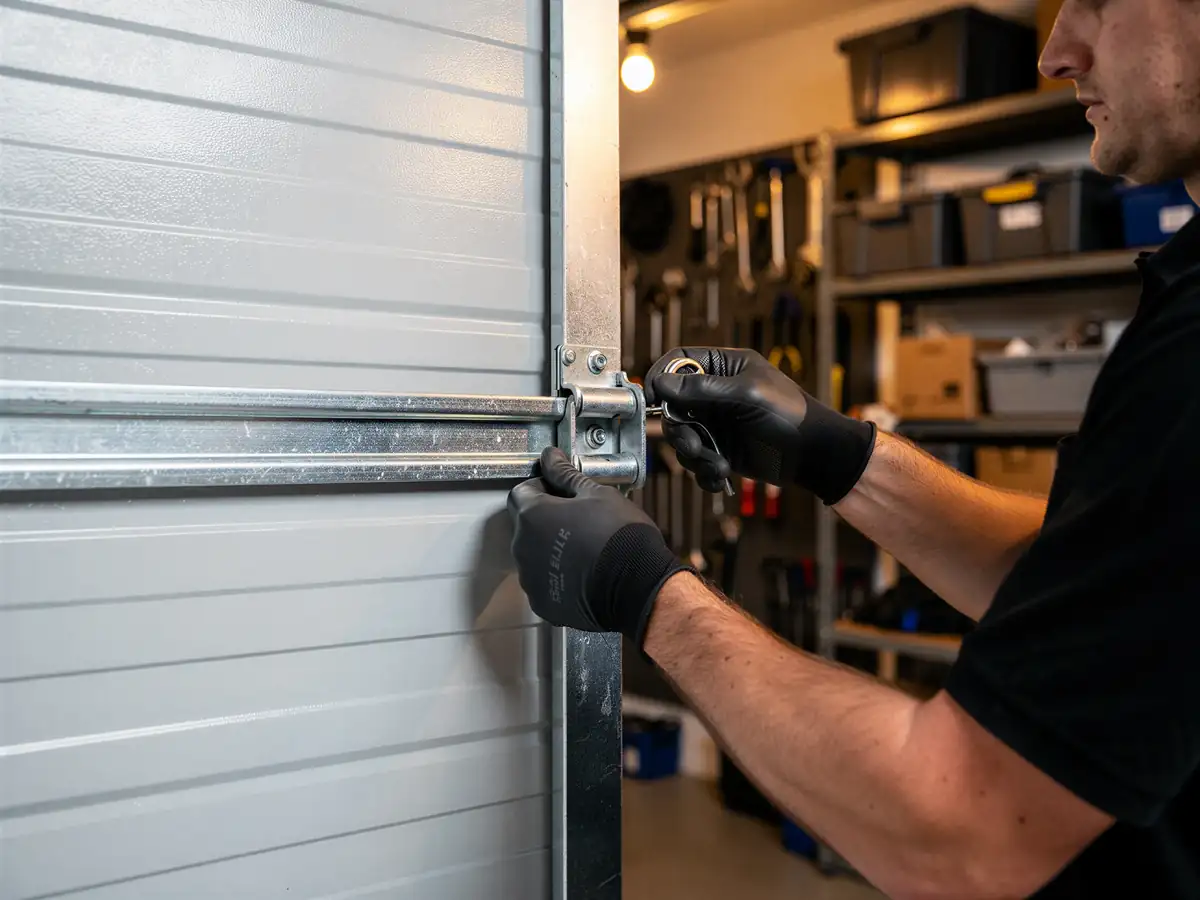
What you shouldn't touch: the springs themselves. A torsion spring on an average residential door holds enough stored tension to break a bone or worse if it lets go while you're working on it, and on a door built in the 1970s or 80s, that spring has had forty-some years to fatigue in ways you can't see from the outside. Cables under tension are the same story. If the door came down crooked, off its tracks, or a cable has snapped, that's a call, not a weekend project.
Parts We Carry
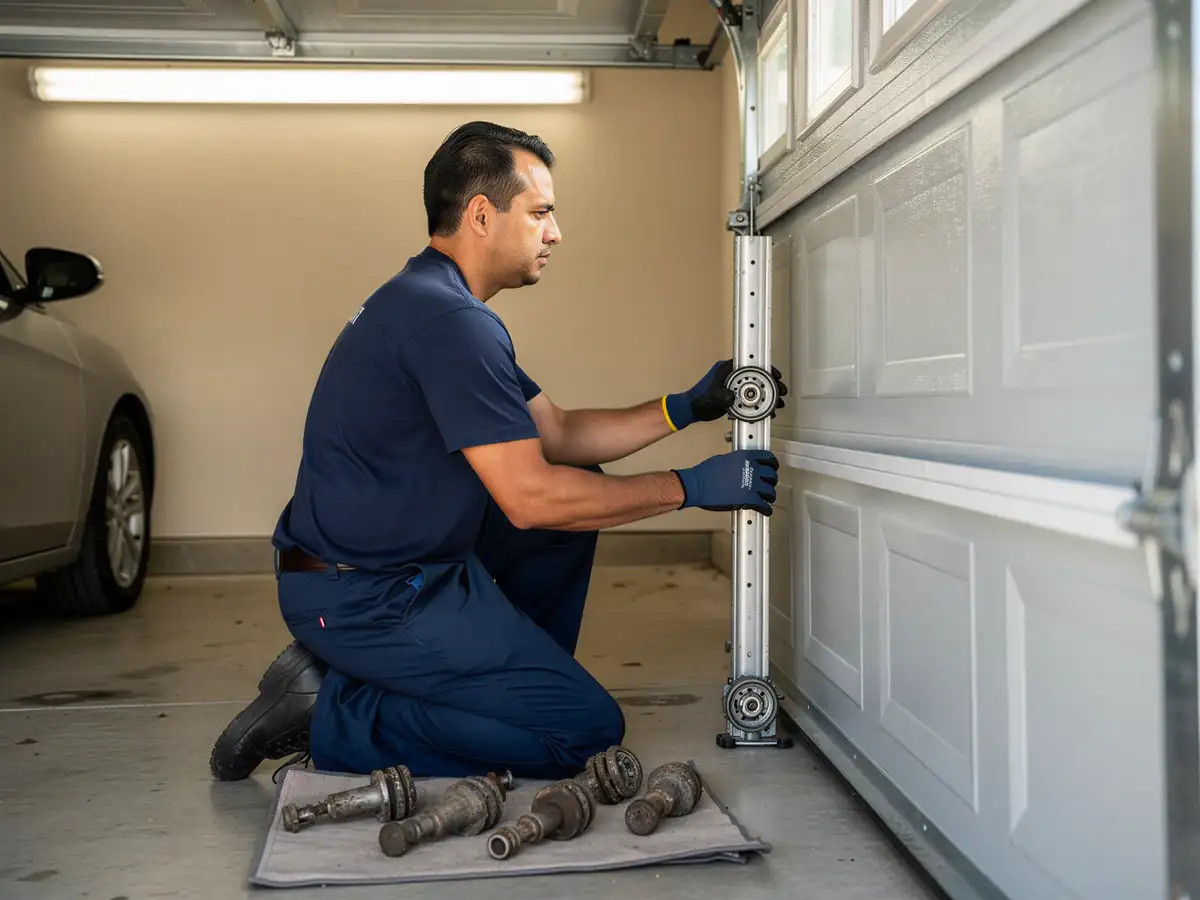
Because so much of West Monroe's housing dates to the mid-1970s, the truck carries torsion springs and rollers sized for the standard residential doors that went in during that era, along with the extension-spring hardware that older single-car garages here still run. We stock common cable, drum, and bottom-bracket combinations, standard track sections, and openers across the usual residential range.
What we don't always have on hand is a discontinued panel pattern from a door that's been out of production for decades, or a proprietary opener part from a brand that's no longer supported. On those jobs we'll tell you honestly whether it's worth ordering the part or whether replacing the section or the opener outright makes more sense, given what a special-order part costs against a new unit.
What Can Go Wrong
The most common emergency call is a broken torsion spring
The door won't lift, or it lifts a few inches and stops dead. Close behind that is a cable that's frayed through and let go, usually on one side, which pulls the door crooked in the opening and can jam it against the track hard enough to bend it.
On older extension-spring doors, the failure we watch for is a spring that's lost its safety cable, or never had one, and lets the whole assembly fly loose when it breaks
Openers fail less dramatically but just as inconveniently - a stripped gear or a dead circuit board leaves the door stuck wherever it happened to be. With a climate here that stays mild but still sees occasional freezing stretches, metal hardware that's already fatigued is more likely to give out on a cold morning than a warm one, simply from the contraction in cold steel.
How Long It Takes
Most spring, cable, and roller jobs in West Monroe get done in one visit, since those parts are standard stock on the truck regardless of which town we're headed to that day. Being four miles from our Monroe base means the drive isn't the variable - what takes time is diagnosing anything unusual once we're there, and ordering a part if the door turns out to need something we don't carry.
If you need the whole job scheduled rather than handled as an emergency, or you want to see the range of work we do in West Monroe beyond repair calls, that's covered separately. For anything happening right now with a door that's stuck, off-track, or making a noise it shouldn't, that's what this page is for.