What You Pay
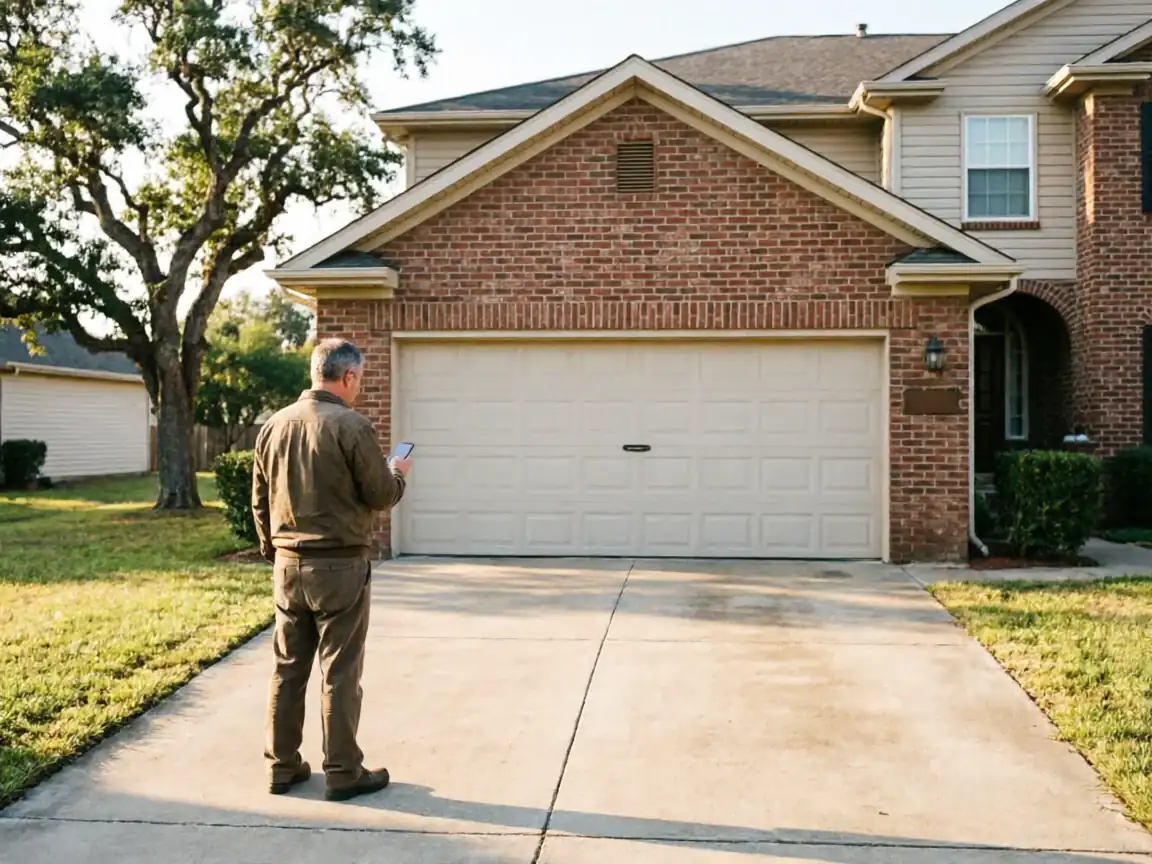
Claiborne's median household income runs $69,173, well above the $46,663 median across the rest of the service area we cover out of Monroe. That gap matters more than it sounds like it should, because it moves the line between fixing a door and replacing it. A household at the area-wide median often has to think hard about a $600 repair bill on a door that's going to need another repair in two years. A Claiborne household at $69,173 is more often in a position to just replace the door and the opener at the same time, rather than keep feeding parts into a 35-year-old unit. We'll still quote the repair first if the door is sound - a cracked bottom panel or a worn roller doesn't mean the whole door is done. But when the spring, the opener, and the track all need attention at once, we'll tell you straight that replacement is usually the better spend here, and we won't talk you into patching something that's going to keep failing.
How Long It Takes
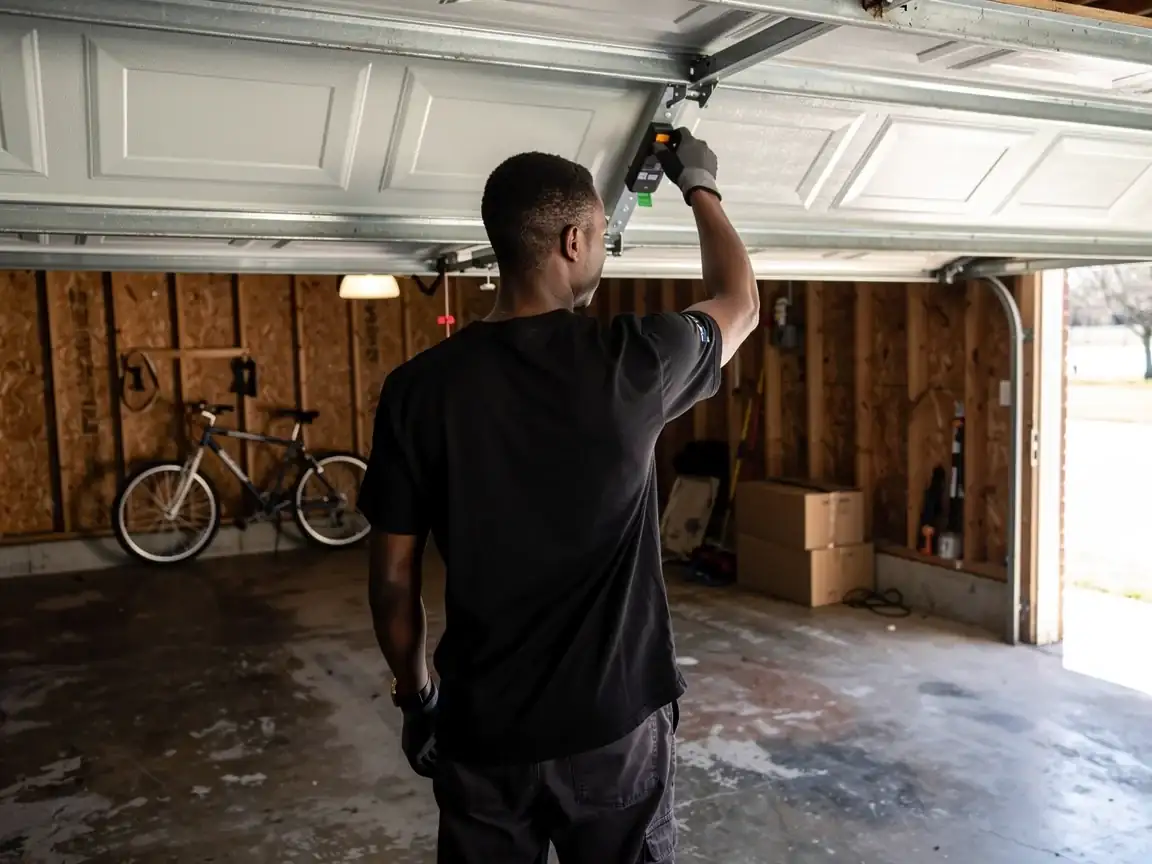
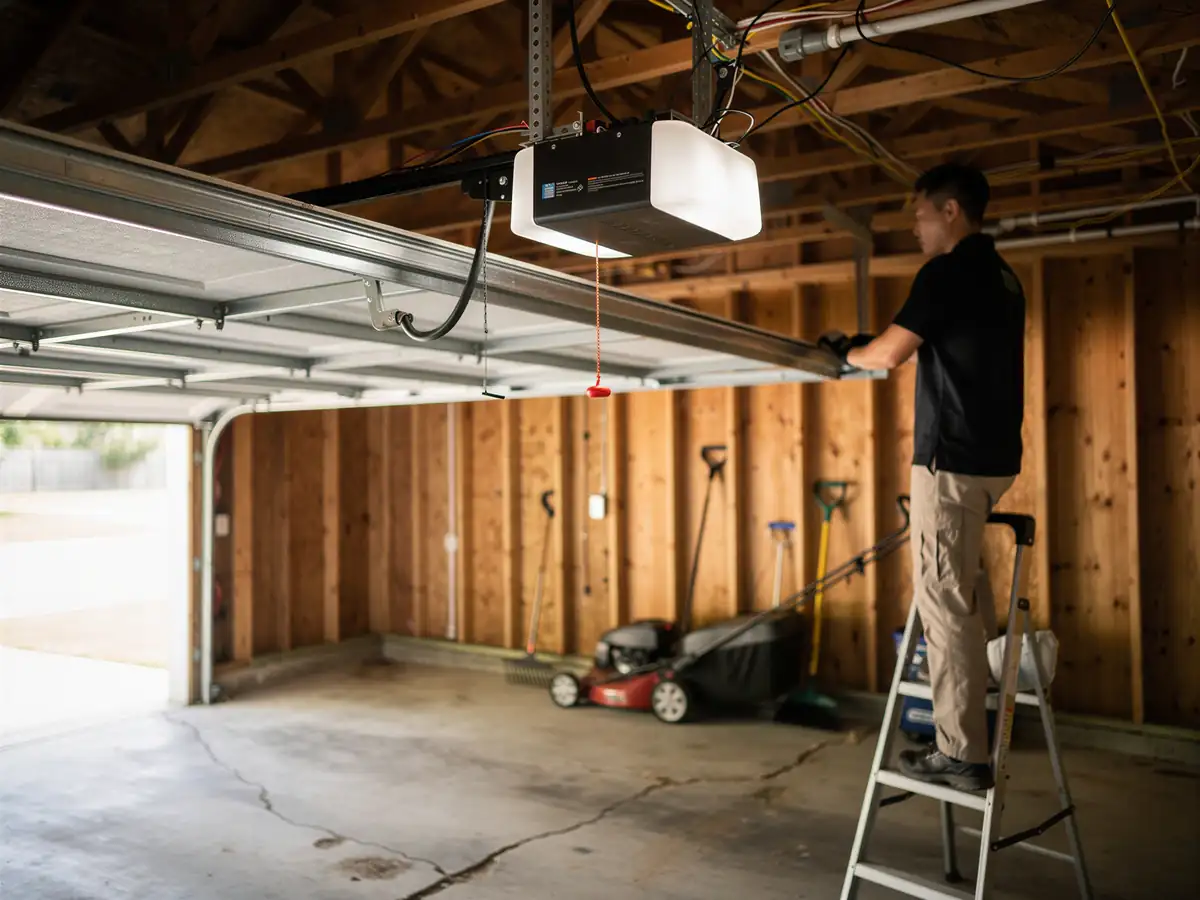
A snapped torsion spring on a standard double door is usually a same-visit job once the truck is on site - strip the old spring, wind the correct one for the door's weight, check the cables and rollers while we're in there. Opener issues take longer to diagnose than to fix, especially on units from the 80s and 90s where the logic board or the gear set is the actual problem, not the sensors everyone blames first. Track and roller work is quick. What slows a job down is parts - if a door is an odd size or an older extension-spring setup that nobody makes anymore, we may need to order instead of carrying it on the truck. We'll tell you on the first look whether your door is a same-day fix or a parts-order situation.
What the Fix Involves
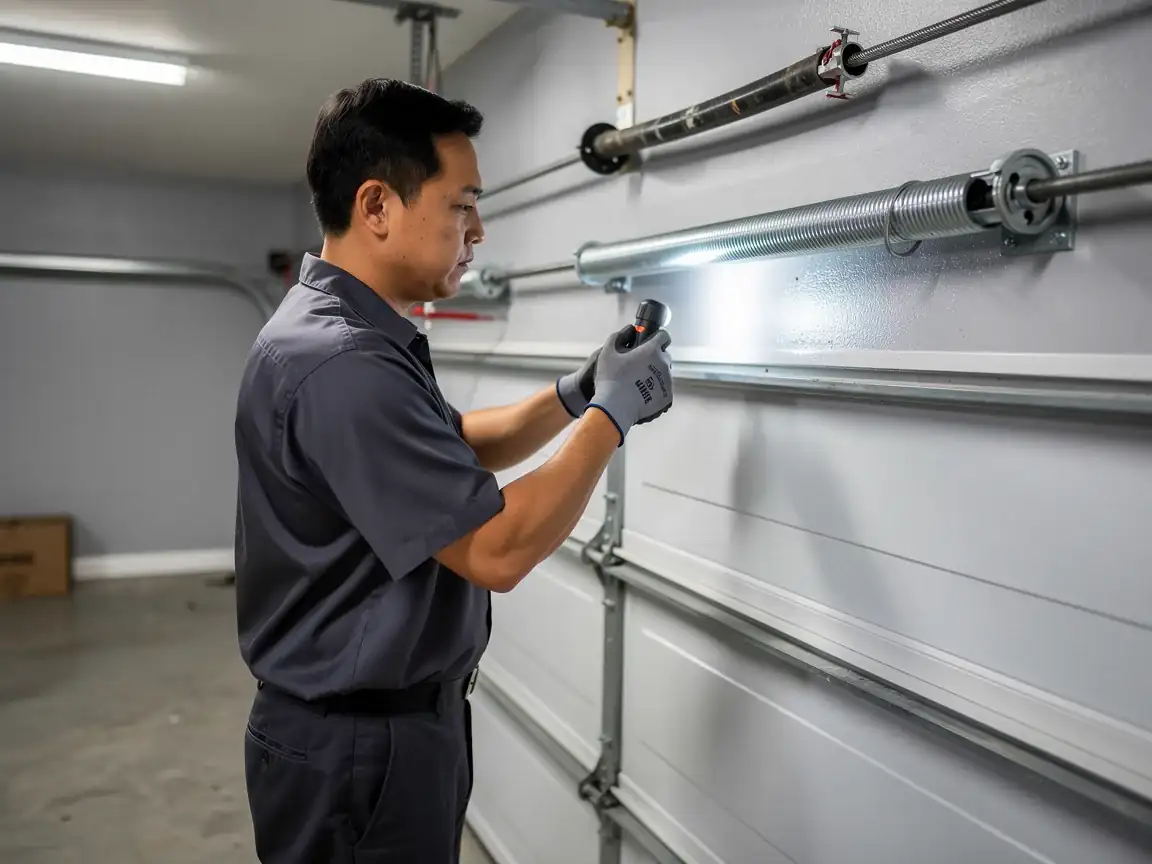
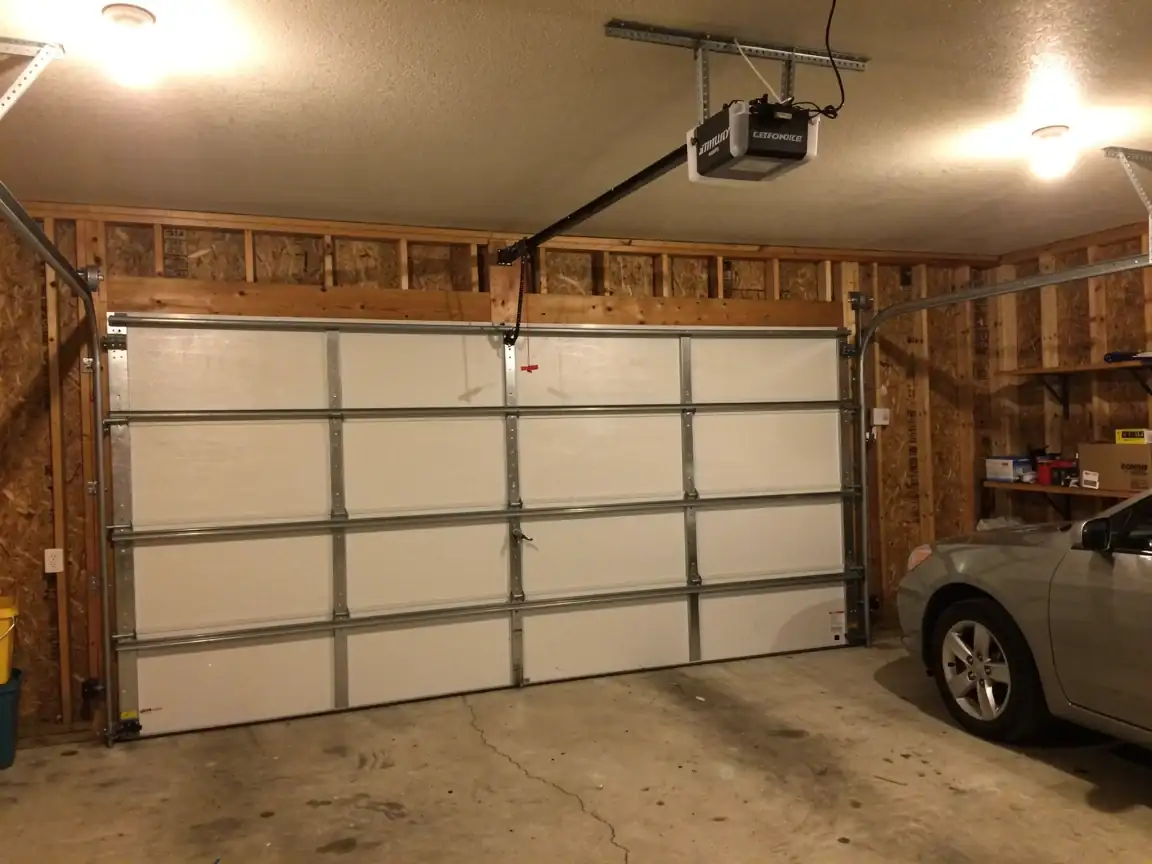
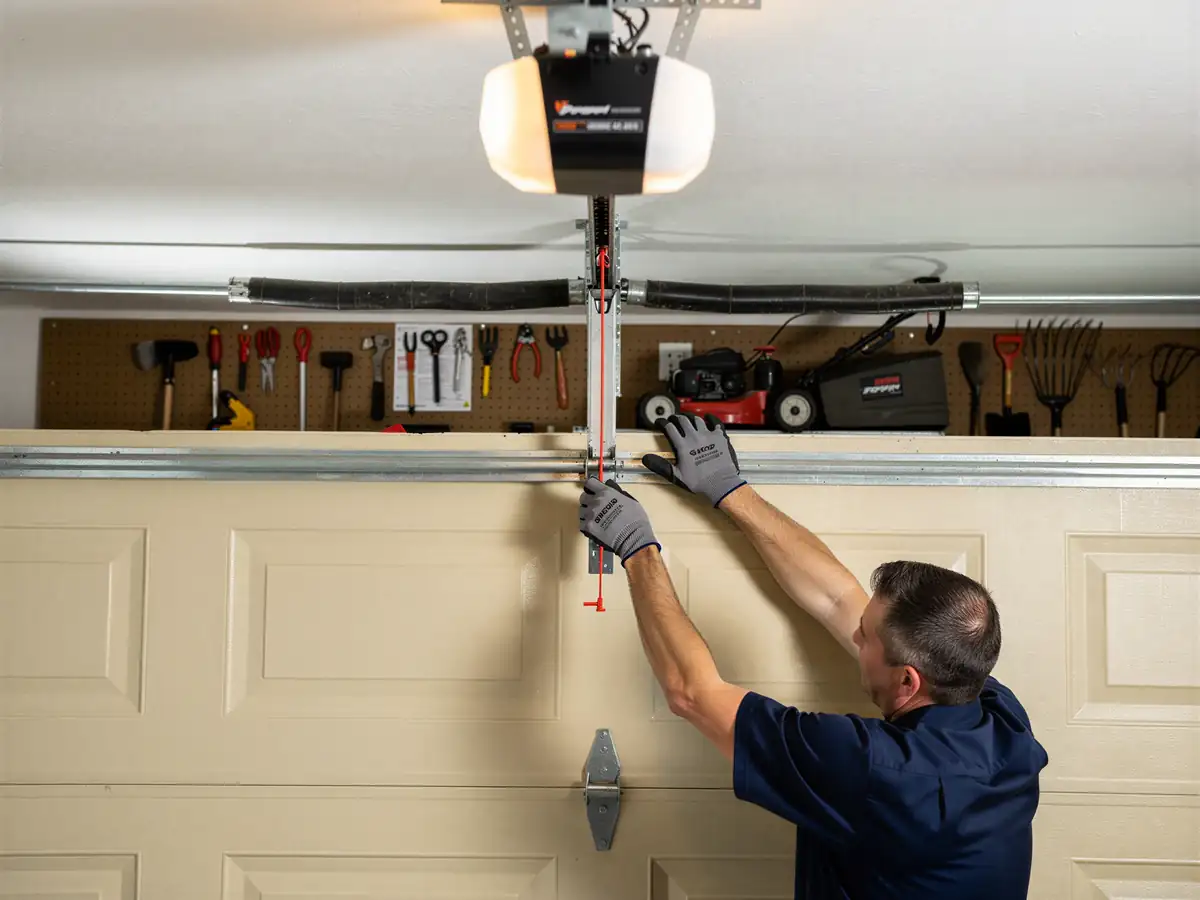
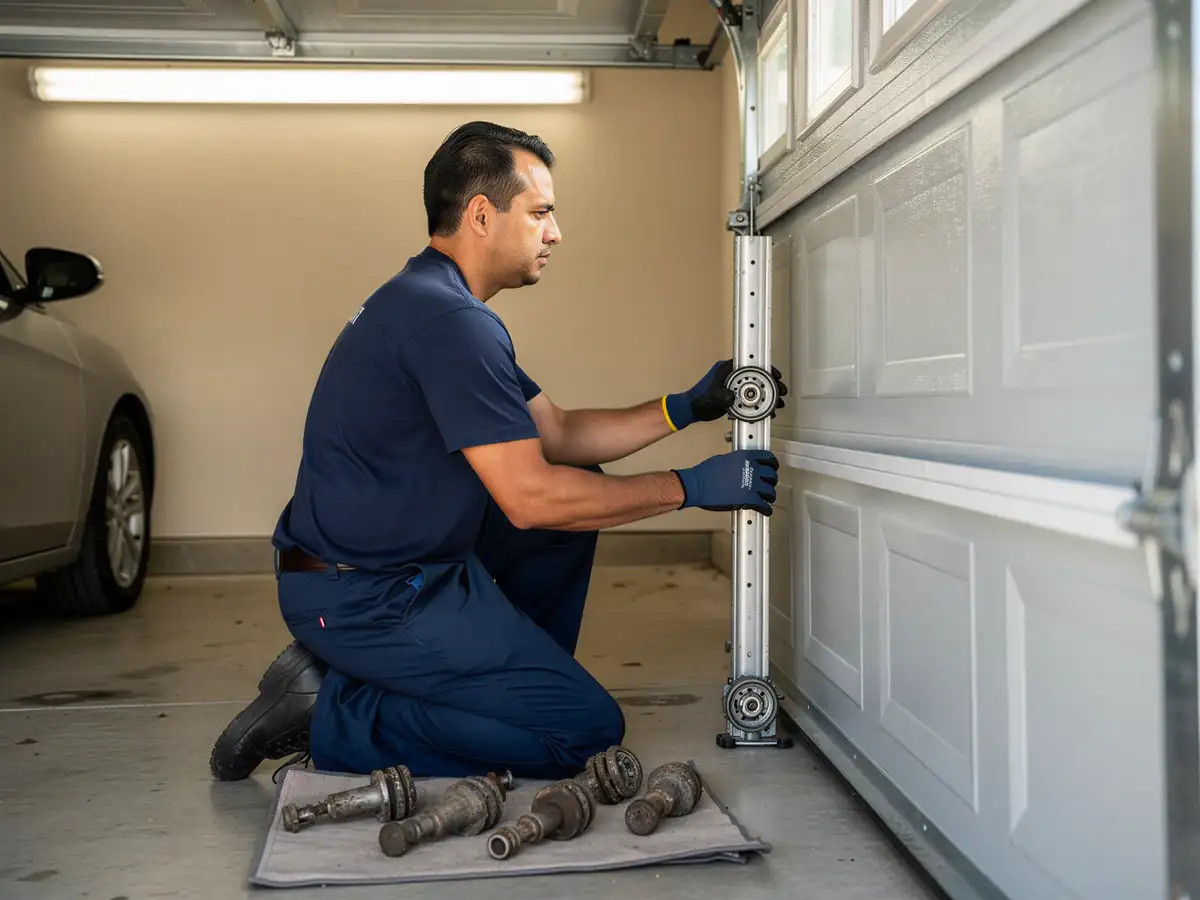
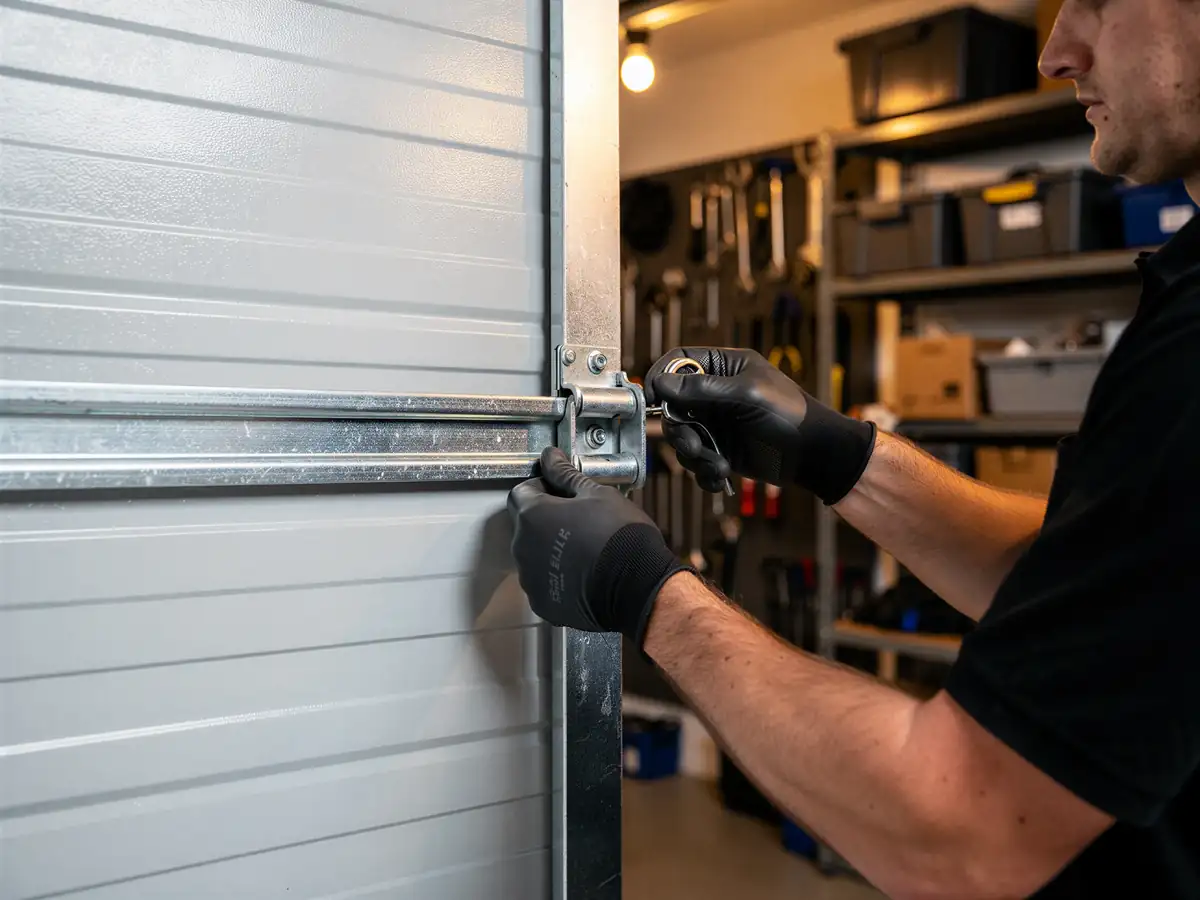
For a broken spring: we unwind and remove the failed spring, inspect the drum and cable for wear, and install a replacement matched to the door's actual weight - not just whatever was on it before, since weight changes if panels or insulation were ever swapped. For opener trouble on older units common to this stretch of 1980s-90s stock, we check the gear, the capacitor, and the wiring before assuming the whole unit needs replacing. For a door that's racked or binding, we check the tracks are plumb and the rollers aren't worn oval, since a bent track on an older door is often cheaper to straighten than replace. One honest limit: if the door itself is warped or rusted through at the bottom, we're not going to spend your money re-hanging it. That's a replacement conversation, not a repair one.