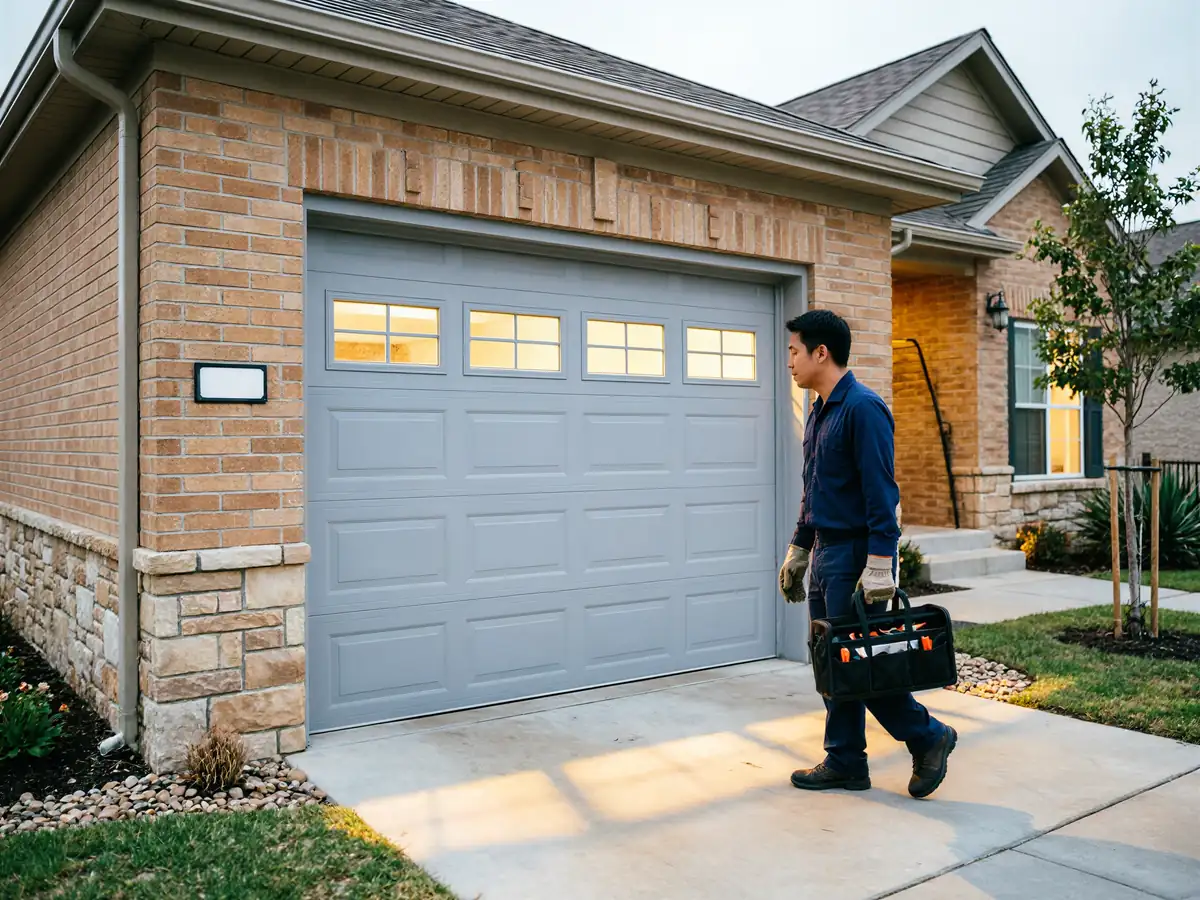
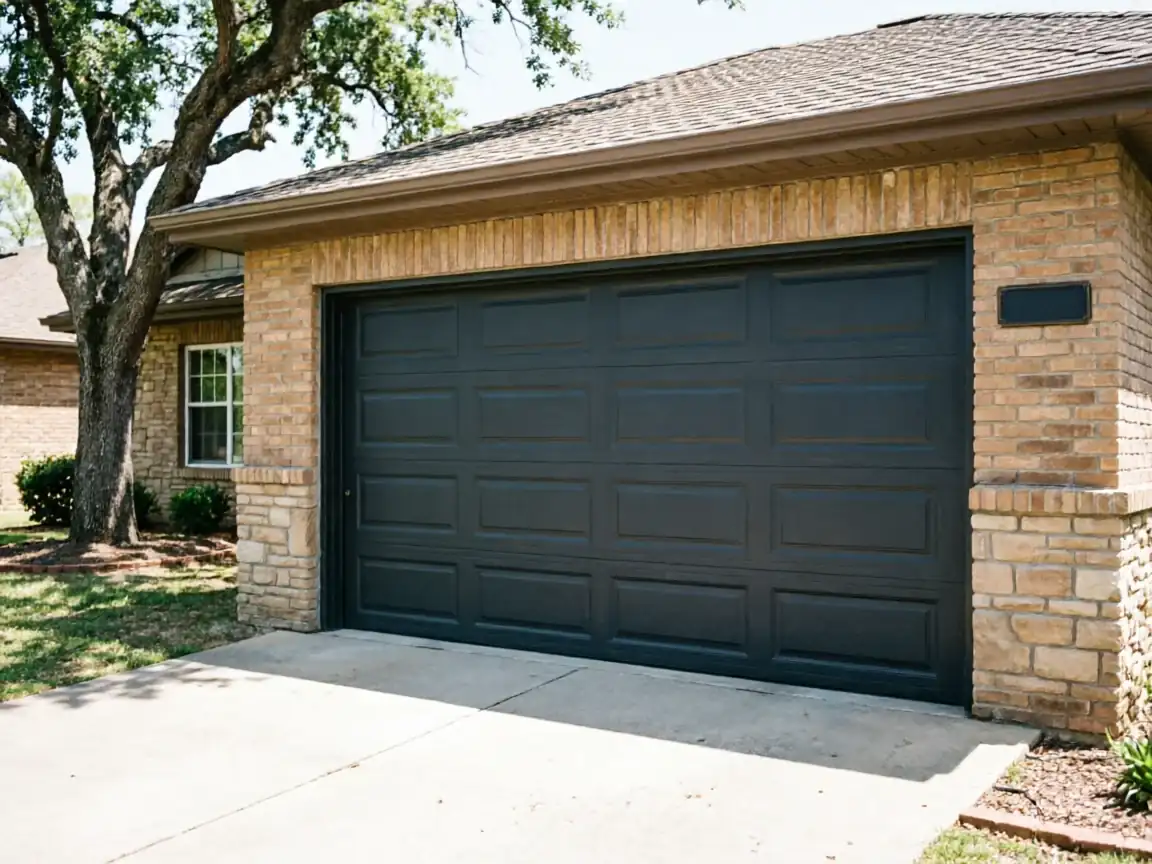
What Can Go Wrong
Richwood's household income runs $31,386, well under the $46,663 median for the wider Monroe service area. That number matters more than it sounds like it should, because it's the line that decides whether a repair makes sense or whether you're throwing good money after a door that's circling the drain.
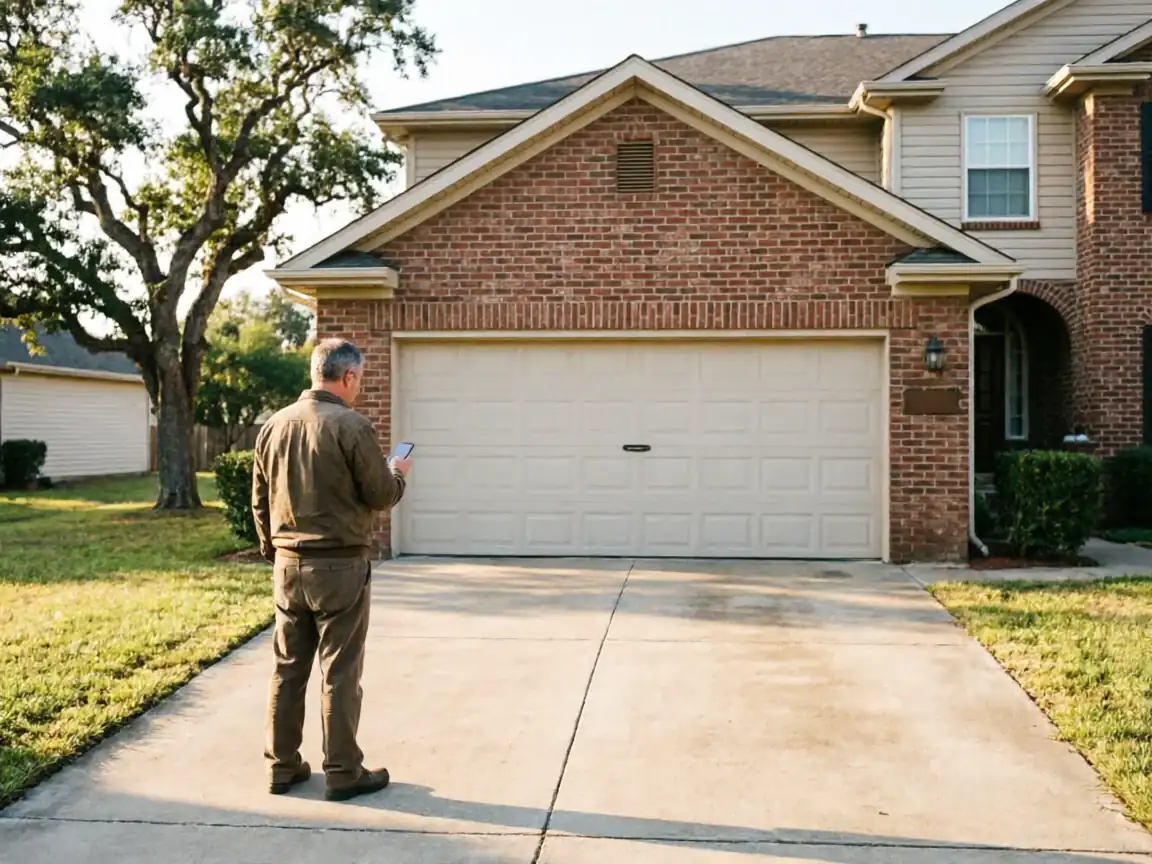
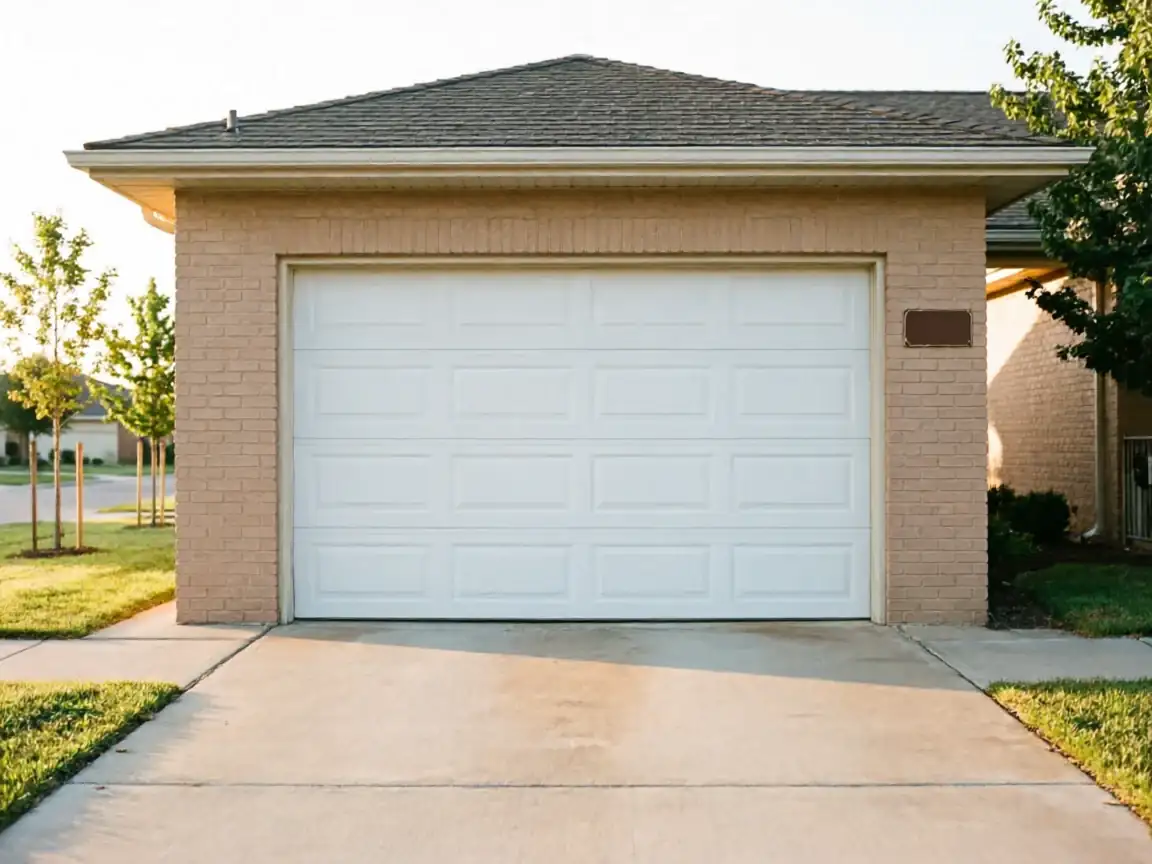
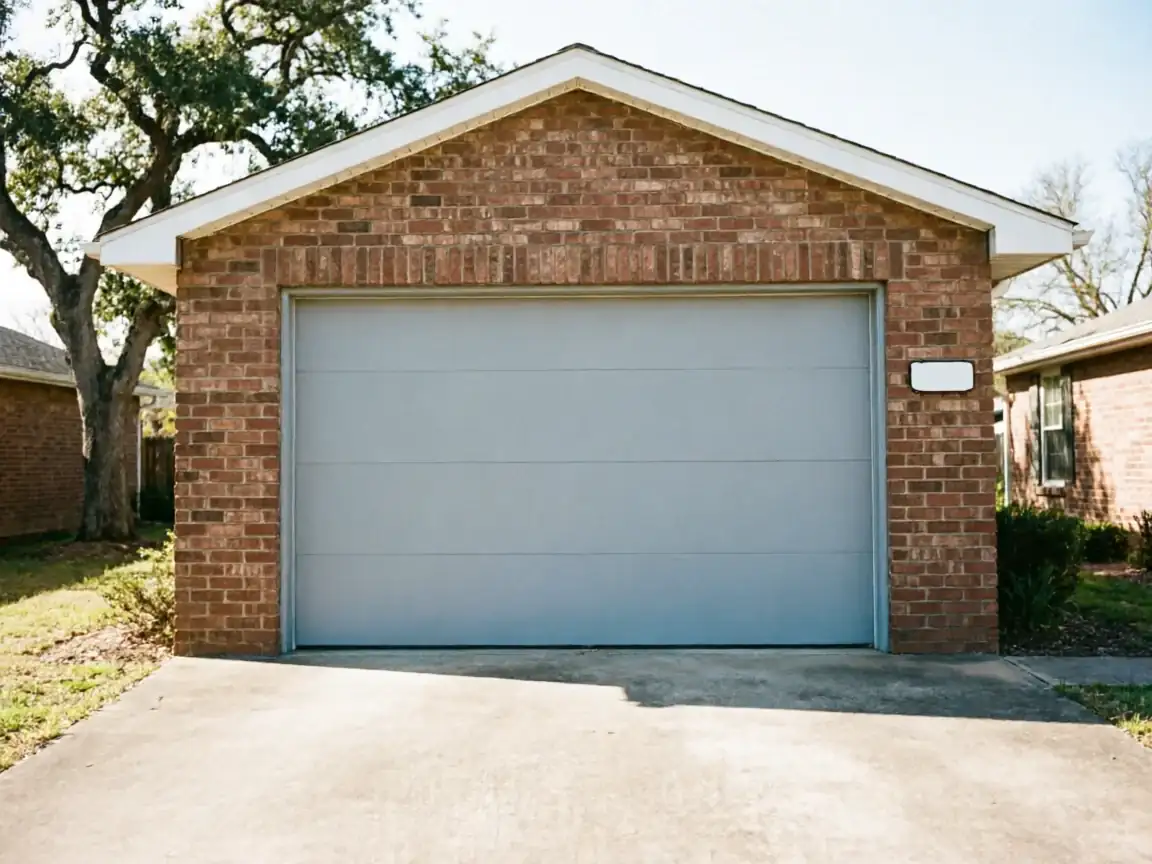
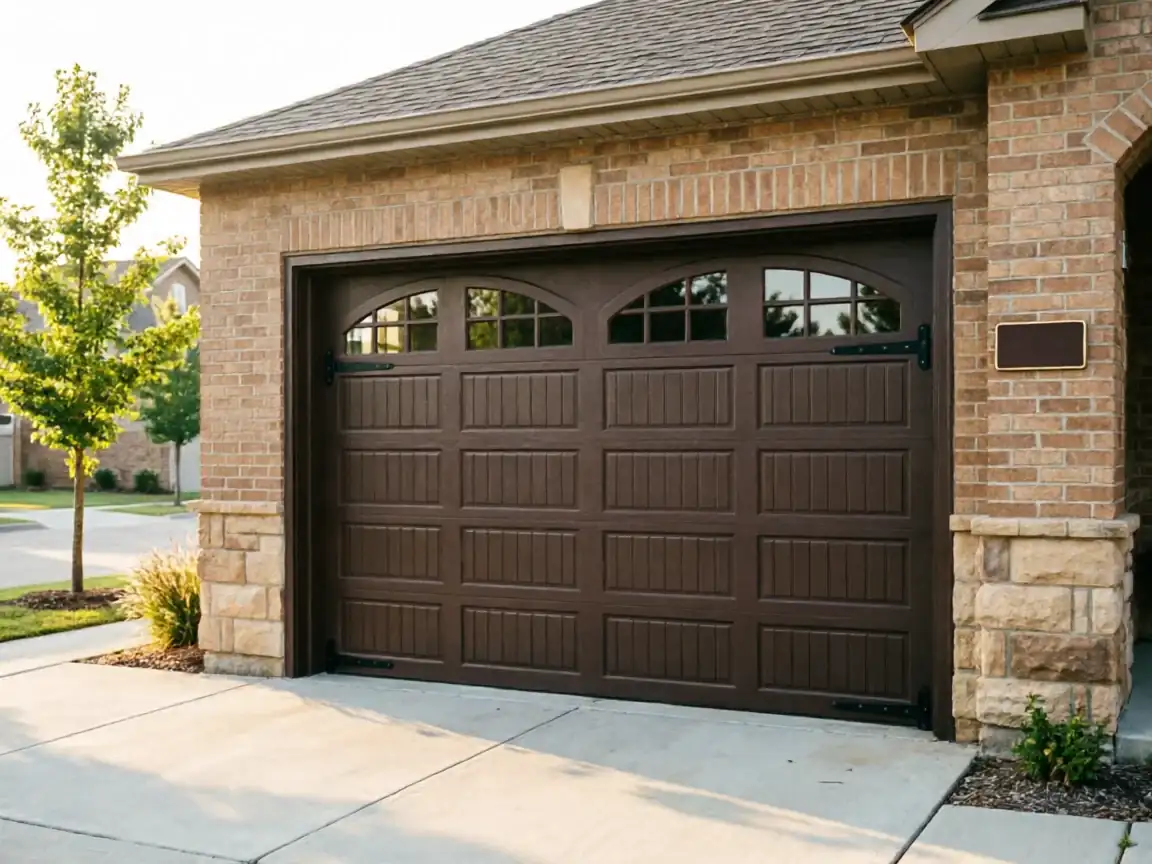
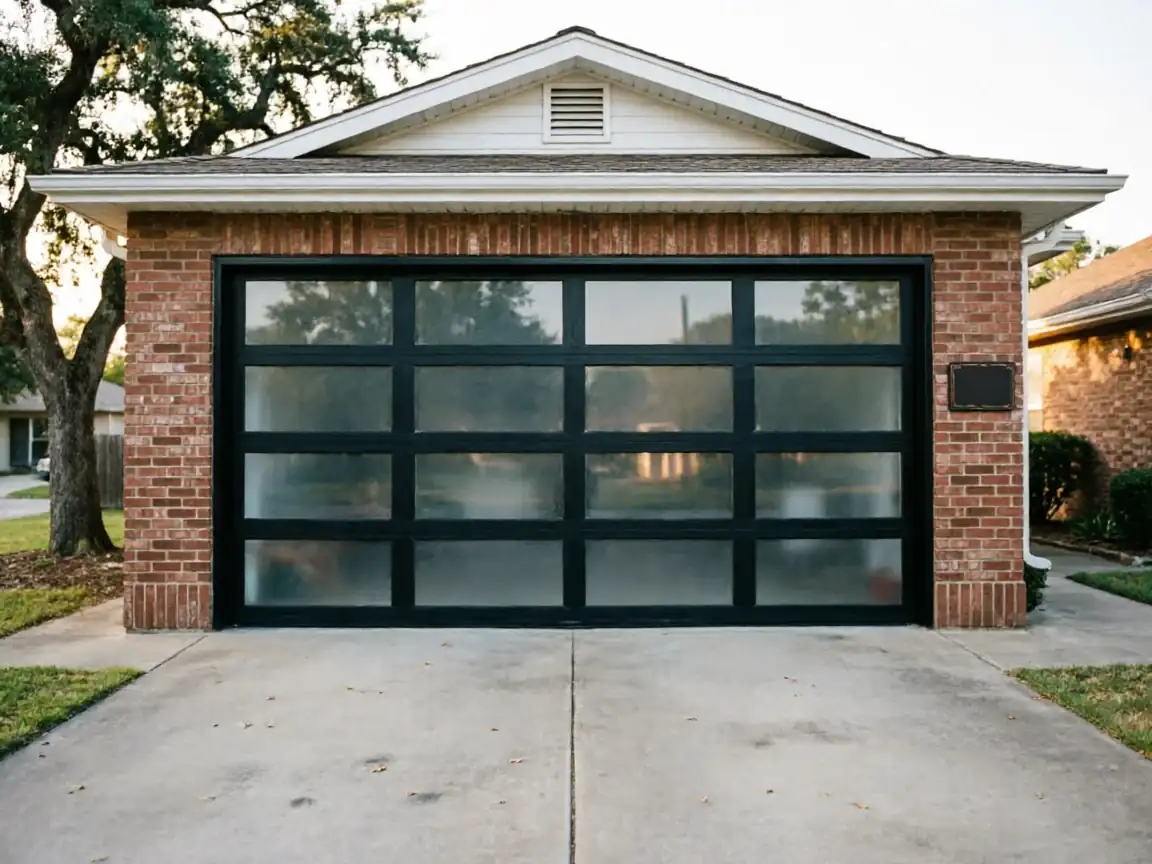
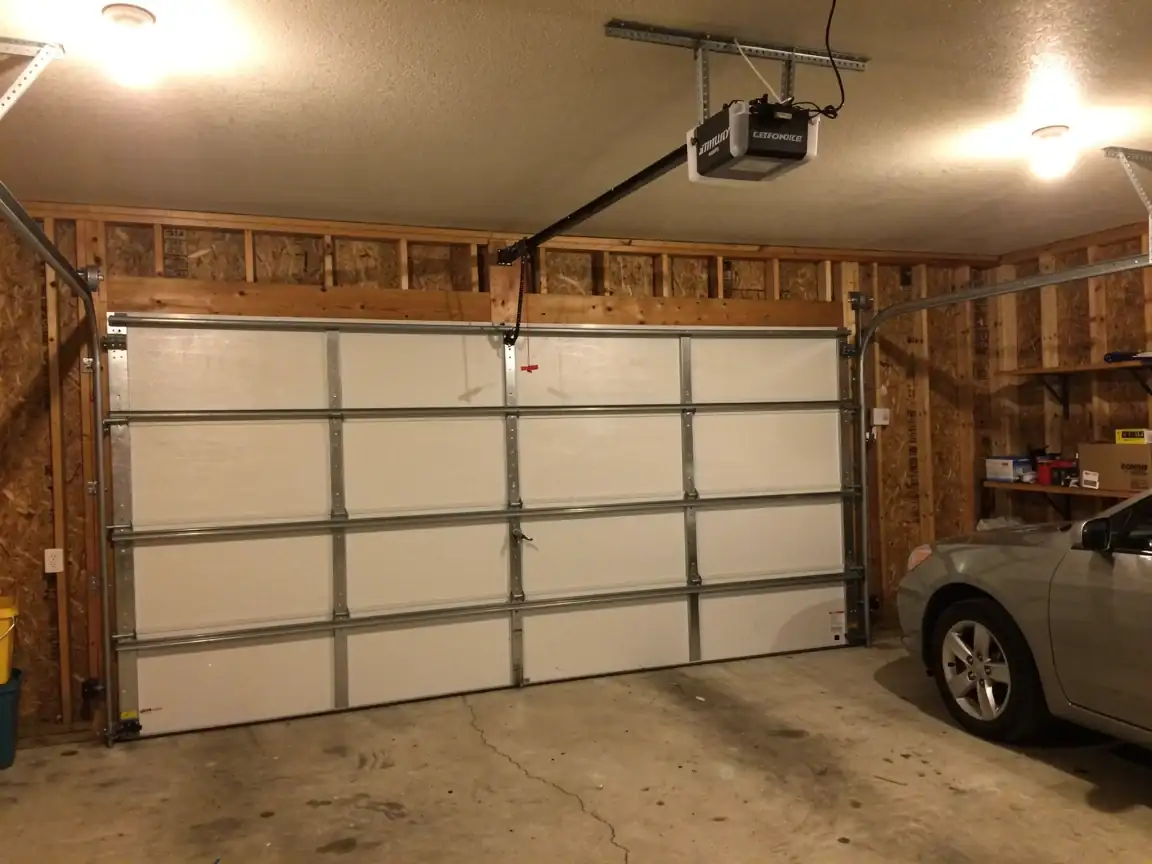
Most houses here went up around 1991, which puts Richwood toward the newer end of the stock we cover - this whole territory runs 1975 to 2005 built, median 1985, and Richwood sits a few years past that midpoint. That means steel sectional doors on extension or torsion springs, not the older one-piece slab doors you still find in the oldest pockets of the territory. The failures we see are the ones that come with age-appropriate wear: a torsion spring that's done its 10,000-cycle run, a nylon roller that's worn its track groove ragged, an opener logic board from the original install finally quitting.
The mild-with-some-freeze climate here doesn't crack concrete or warp doors the way a hard winter would, but it does let condensation sit in steel panels that were never sealed well to start, and that shows up as rust bubbling at the bottom panel seam before anything else fails.
Doing It Yourself
A garage door is one of the few things in a house where DIY has a real ceiling, and torsion springs sit right at it. A spring under full tension on a door built in the early 1990s can still put out enough force to break a wrist or worse if the winding bar slips - that's not a Richwood-specific risk, it's physics, and we're not going to pretend otherwise.
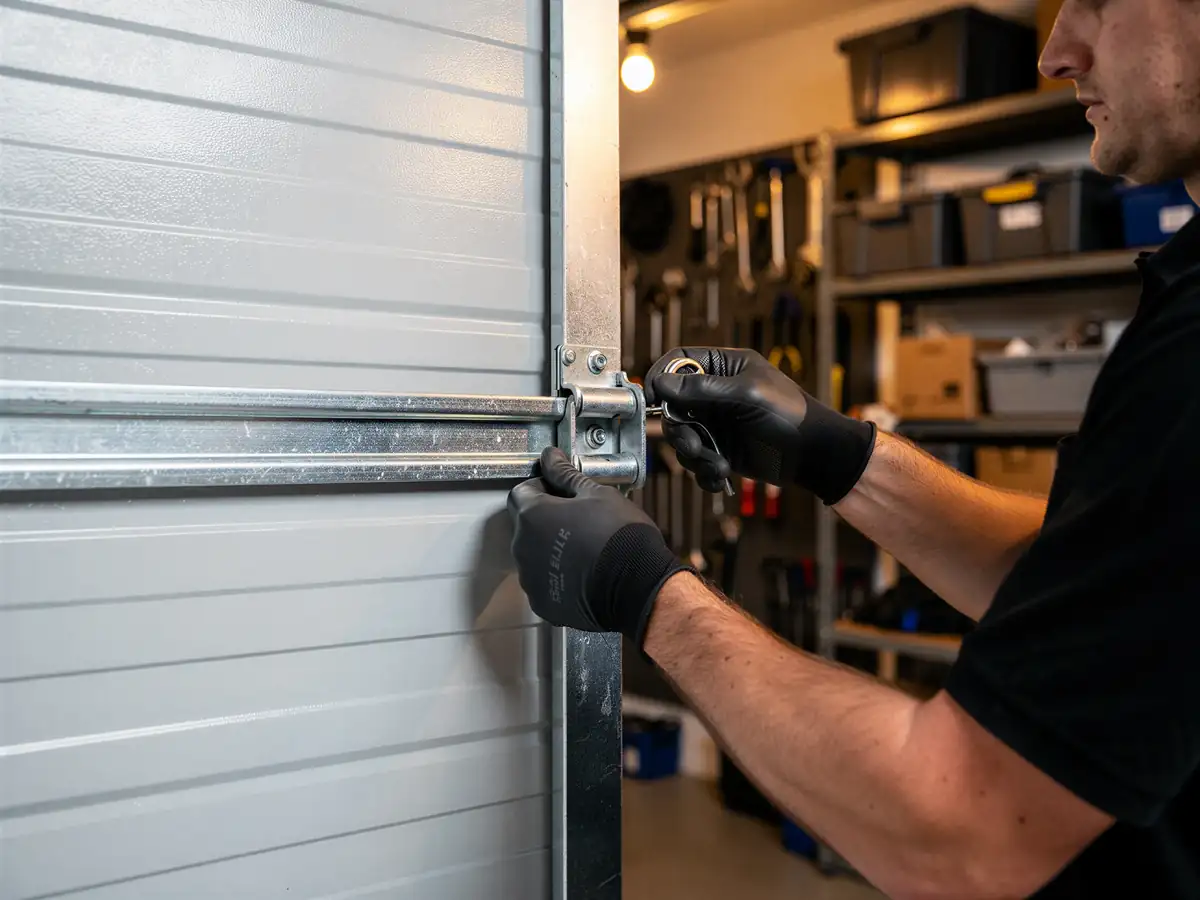
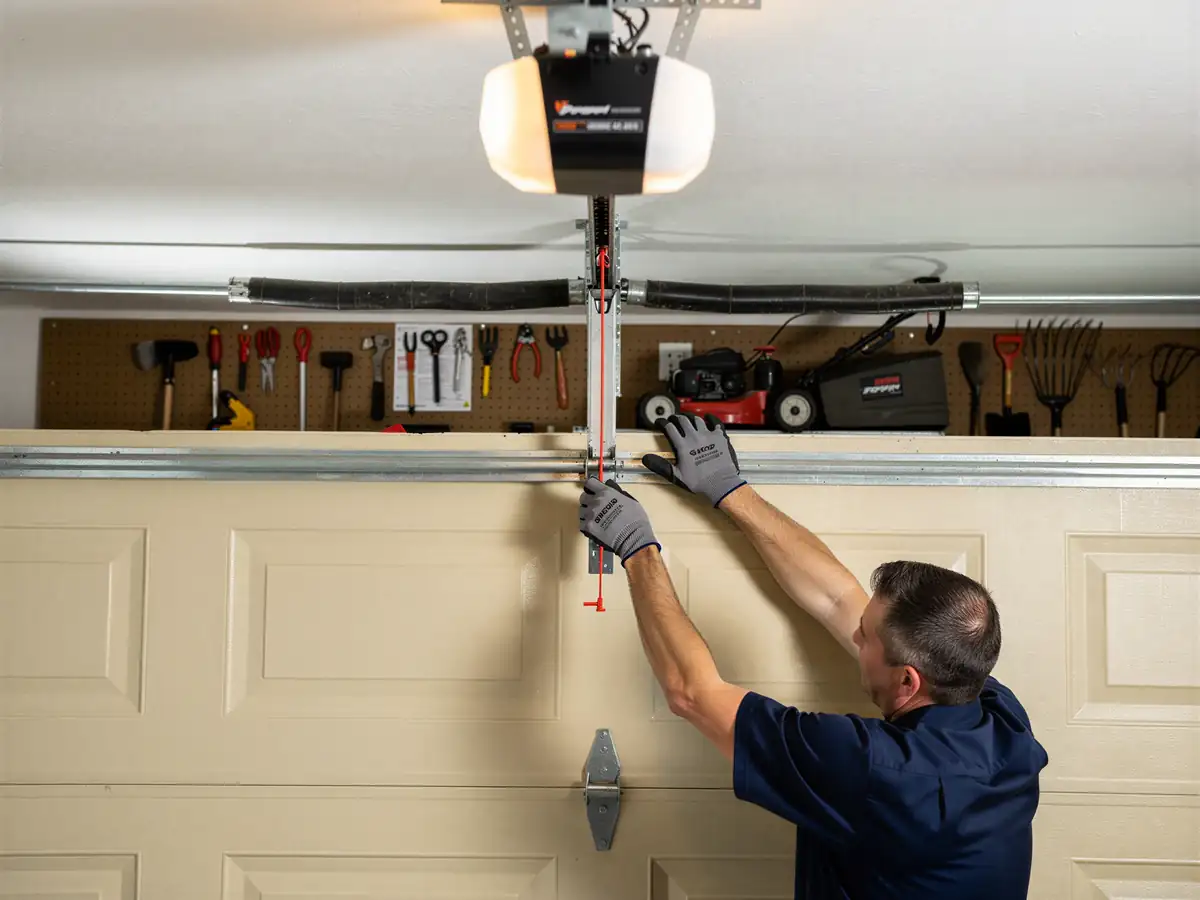
What you can safely handle: tightening loose hinge bolts, lubricating rollers and hinges with a garage-door-specific lubricant (not WD-40, which washes grease out), replacing weatherstripping along the bottom, and checking that the photo-eye sensors near the floor are aligned and clean. If the door is noisy but still balances and runs smooth by hand with the opener disconnected, you're probably looking at a $10 roller problem, not a $300 spring problem. If it doesn't hold its position halfway open when you pull the release cord, stop - that's a spring, and it's not a weekend project.
What the Fix Involves
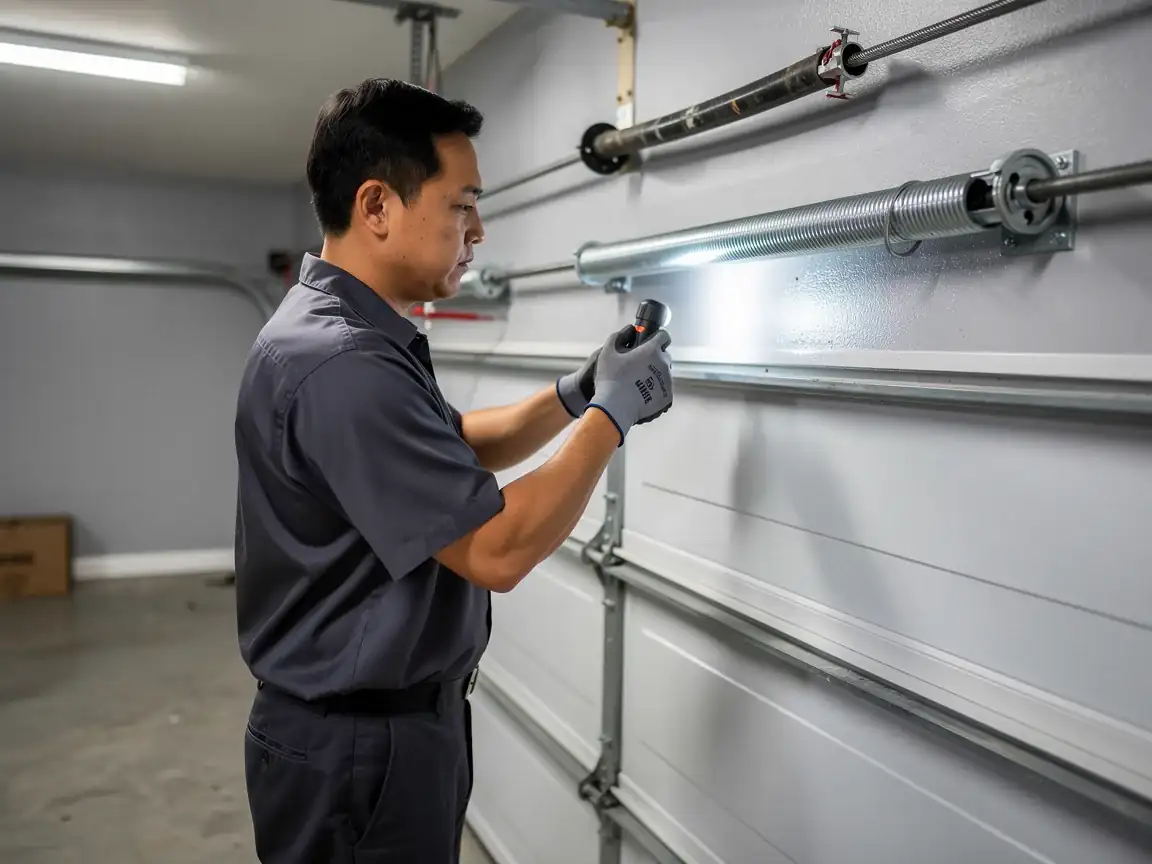
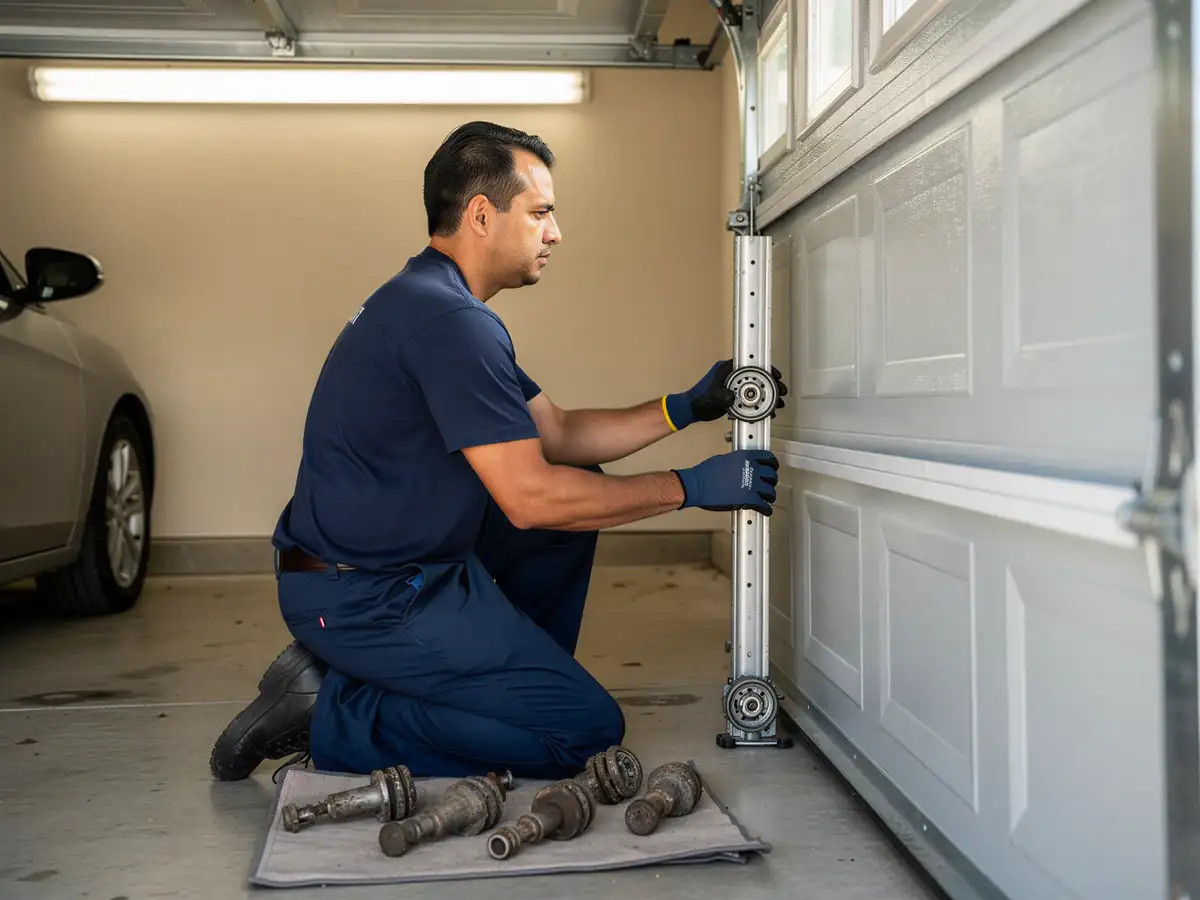
On a door from Richwood's era, the job usually starts with checking the spring size against the door weight, because a lot of these doors are still running their original torsion spring and it's rarely sized right for what's actually hanging on it after 30-plus years of panel sag and added insulation kits. We'll pull the spring, measure wire gauge and wind, and match it rather than guess.
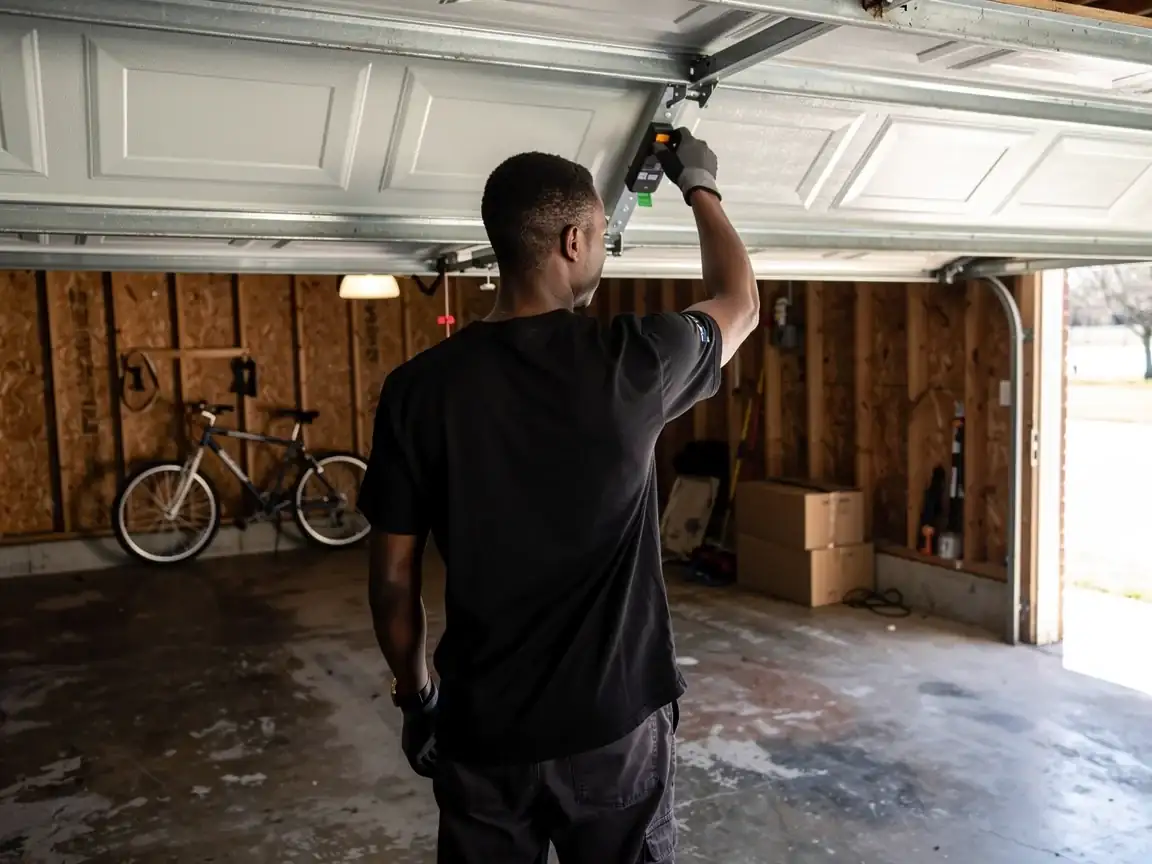
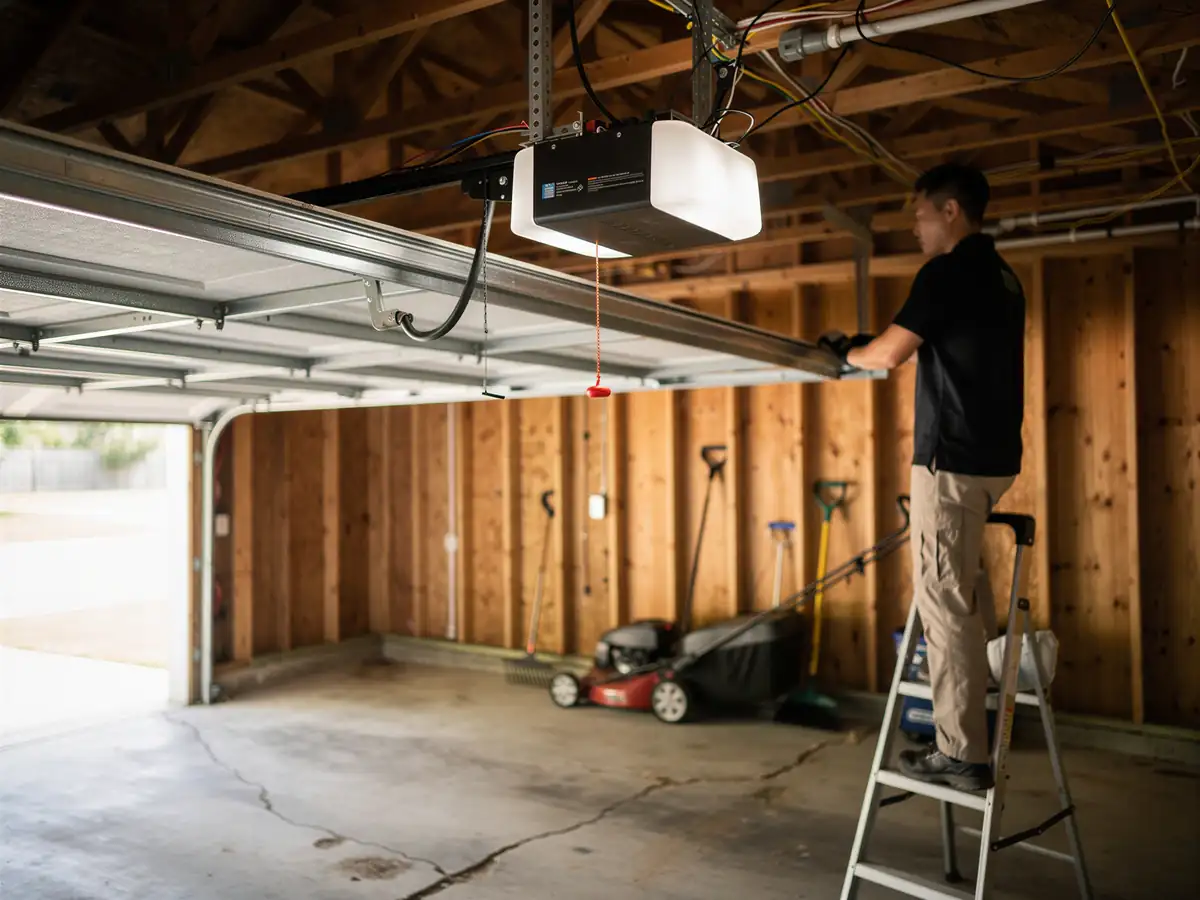
Openers from this build period are often chain-drive units nearing or past their working life, and if the logic board or motor is the actual failure, replacing the opener outright is usually cheaper than chasing a part for a model that's been out of production for years. Track and roller work is straightforward on these doors - standard 2-inch track, nothing unusual about the hardware - so that part of the job tends to go fast regardless of what else is wrong.
What You Pay
This is where Richwood's income number earns its place in the conversation
At $31,386 median household income, a full door replacement is a harder call here than it is in the higher-income pockets of the territory, and we treat it that way - if a spring, a few rollers, and a tune-up get the door back to solid working order, that's what we'll recommend, even when a sharper-looking sale would be a full replacement.
We'll give you the repair cost and
Where it's relevant, what a replacement would run, before we start, so you're deciding with real numbers instead of guessing. We don't carry parts for every opener model ever sold, so if your opener is an obscure or discontinued unit, there can be a short wait on a specific part - we'll tell you that up front rather than after the truck's already there.
How Long It Takes
Most single-door repairs - spring swap, roller replacement, cable re-seat, sensor alignment - are a one-visit job once the truck is on site, typically finished in under two hours. Opener replacement adds time for programming and testing the safety reverse, but it's still a same-visit job in most cases.
What stretches the timeline isn't the work itself, it's parts availability. If your door needs a spring size or an opener board we don't carry on the truck, that part has to be ordered, and the second visit gets scheduled once it's in. We won't know whether that applies to your job until someone's looked at the actual door, so we don't quote a universal timeline over the phone - we'll tell you after the first look whether it's one visit or two.