How to Book
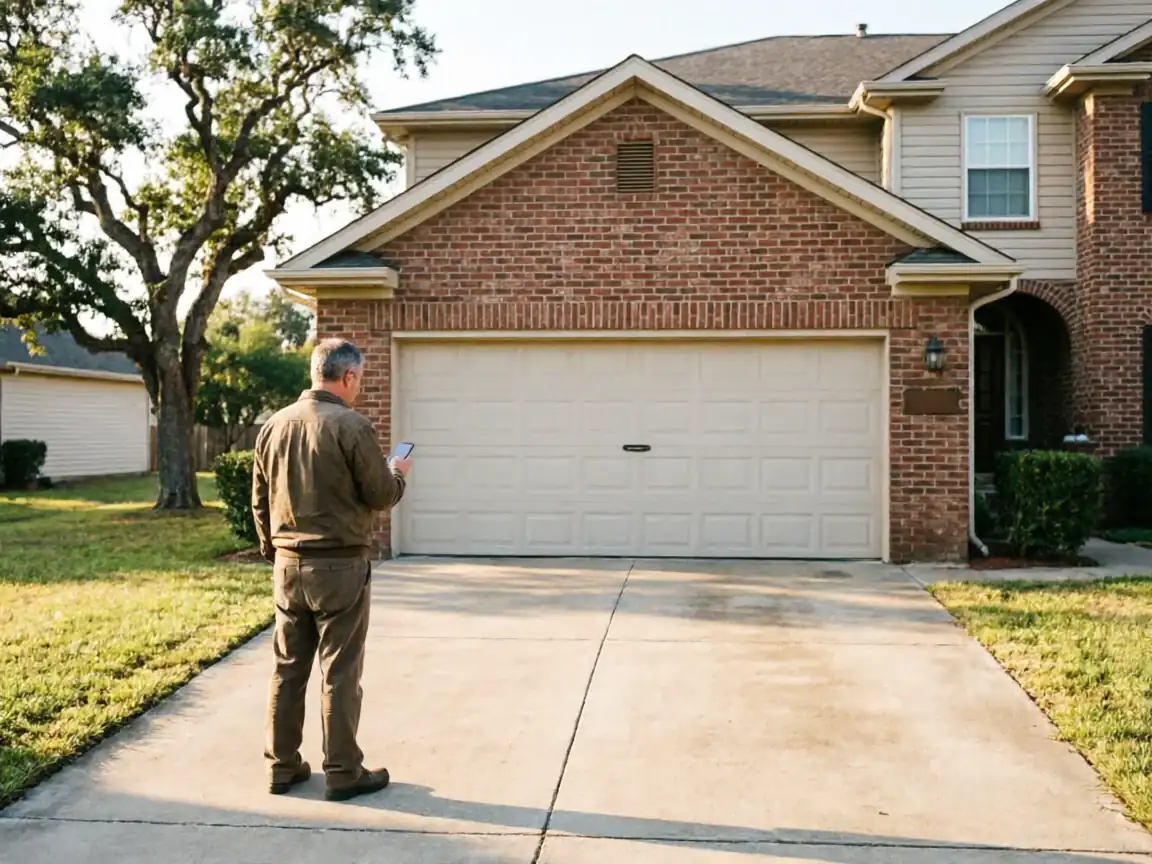
We run this call out of Monroe, about 7 miles down the road, so when you call we're not guessing at drive time the way we might for a town further out like Collinston or Rayville. Tell us the door won't open, won't close, or is making a noise that scares you, and we'll ask a few questions before the truck leaves - what the door did right before it stopped, whether the opener light is blinking, whether a spring is visibly separated. That lets us bring the right spring size or opener part instead of showing up and driving back for it.
We don't keep a branch in Swartz and we're not going to pretend we do. The truck comes from Monroe on every call here, same as it does for the general garage door work we do in town - see our Swartz page for the non-emergency side of that. If you're comparing us against what we cover for Monroe itself, that's laid out on the Monroe emergency repair page.
Have the door's brand or opener model ready if you know it. With 1,572 households in this part of the service area, we see plenty of the same openers and torsion setups repeated house to house, and a model number cuts the guesswork in half.
Doing It Yourself
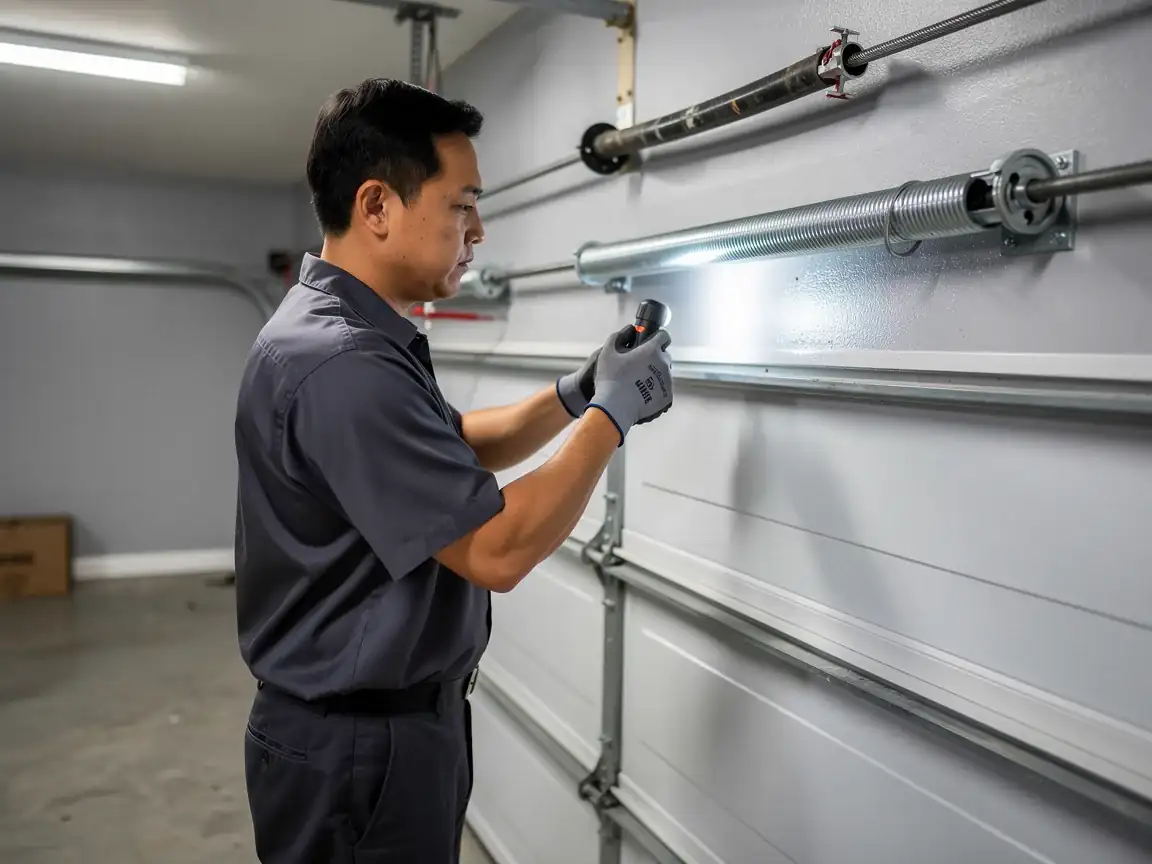
If a cable has jumped the drum or a spring has let go, leave the door alone
A torsion spring under tension can put someone in the hospital, and on a door this old the spring may not be the size you'd expect from a newer build. Unplug the opener if the door is stuck halfway - don't keep hitting the button, it just burns out the motor or strips the gear.
What you can check safely
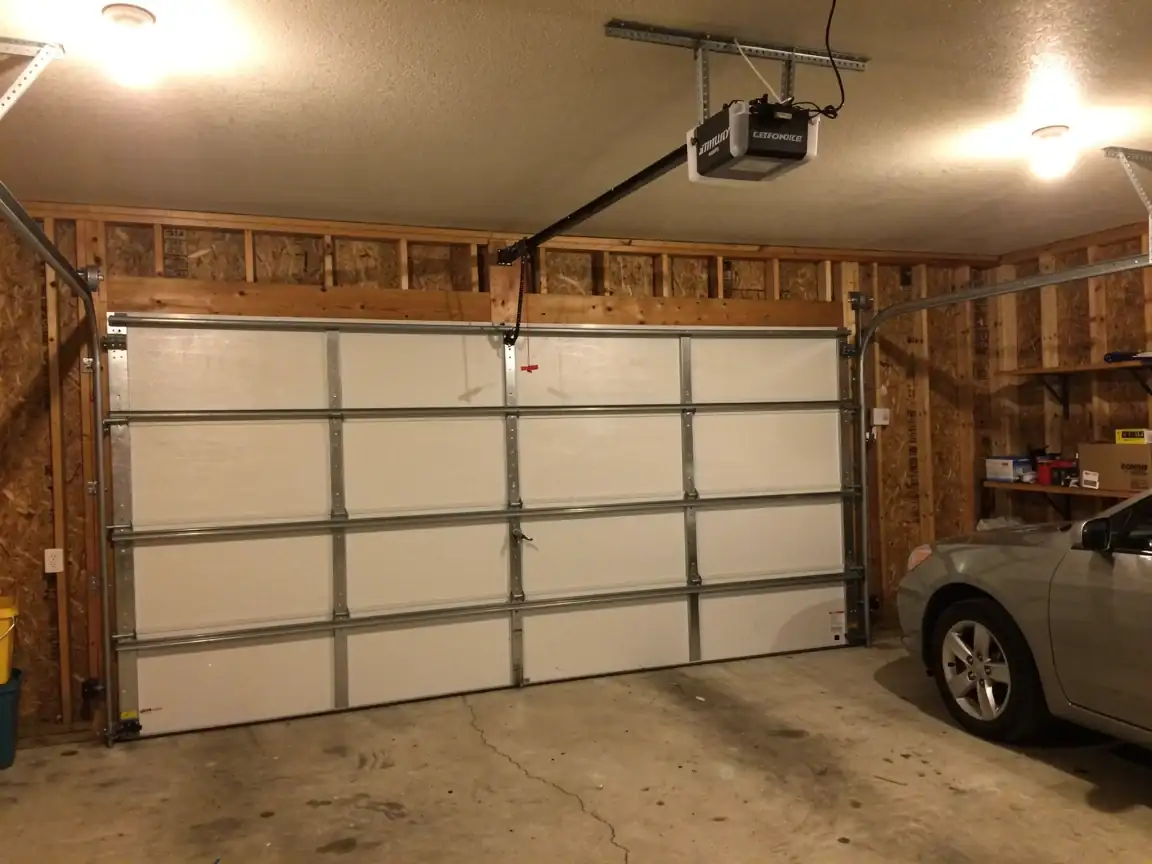
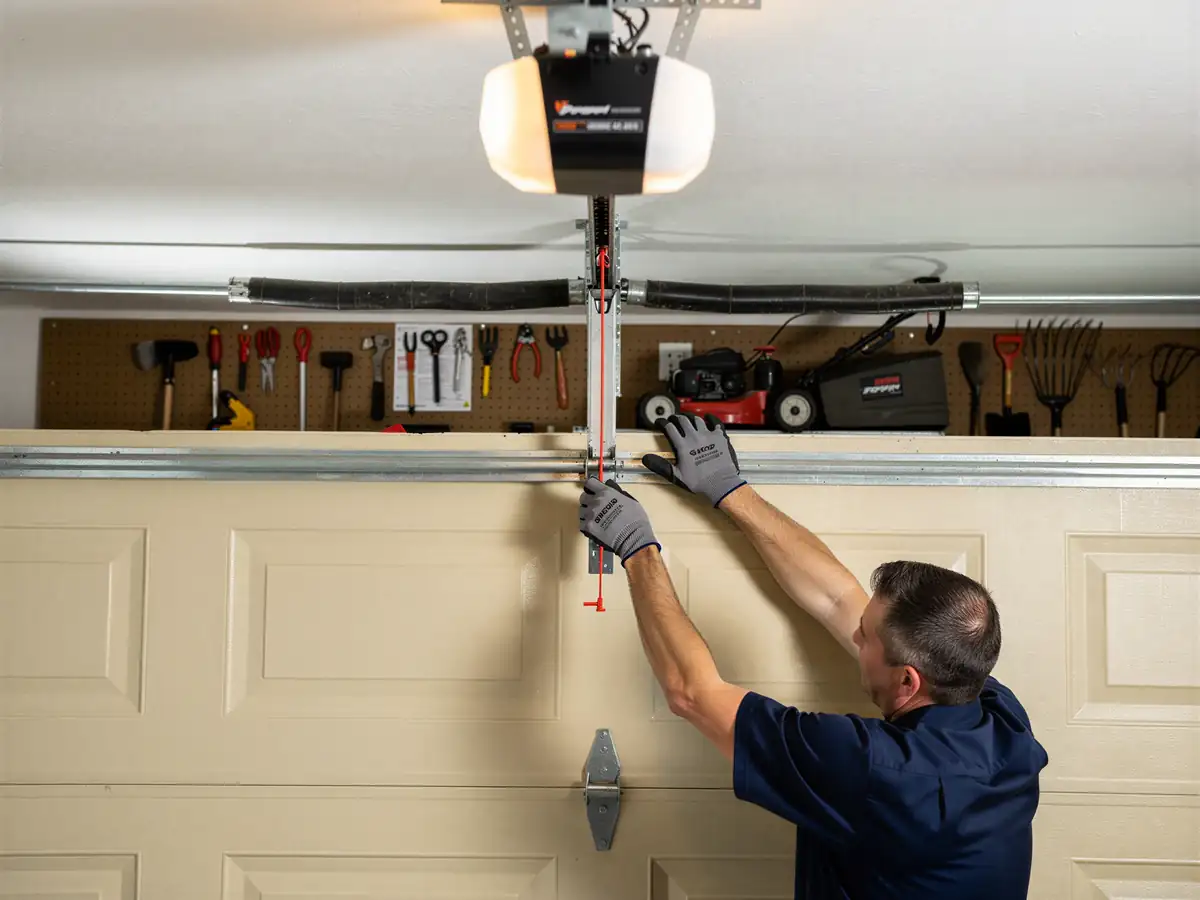
The photo-eye sensors near the floor, for dust or a knocked-loose bracket, since that's a common reason a door reverses or refuses to close. You can also look at the track for a bent section where something backed into it. Both of those you can see without touching a spring or a cable.
Here's the honest limit
If the opener is original to a house built in the 1980s, the part may not be something we can pull off a shelf. Some of those drive gears and circuit boards are long discontinued, and we'd rather tell you that up front than have you wait on a part that isn't coming. Sometimes the right call is a new opener, not a repaired one, and we'll say so instead of running up a bill chasing the old part.
How It Shows Up
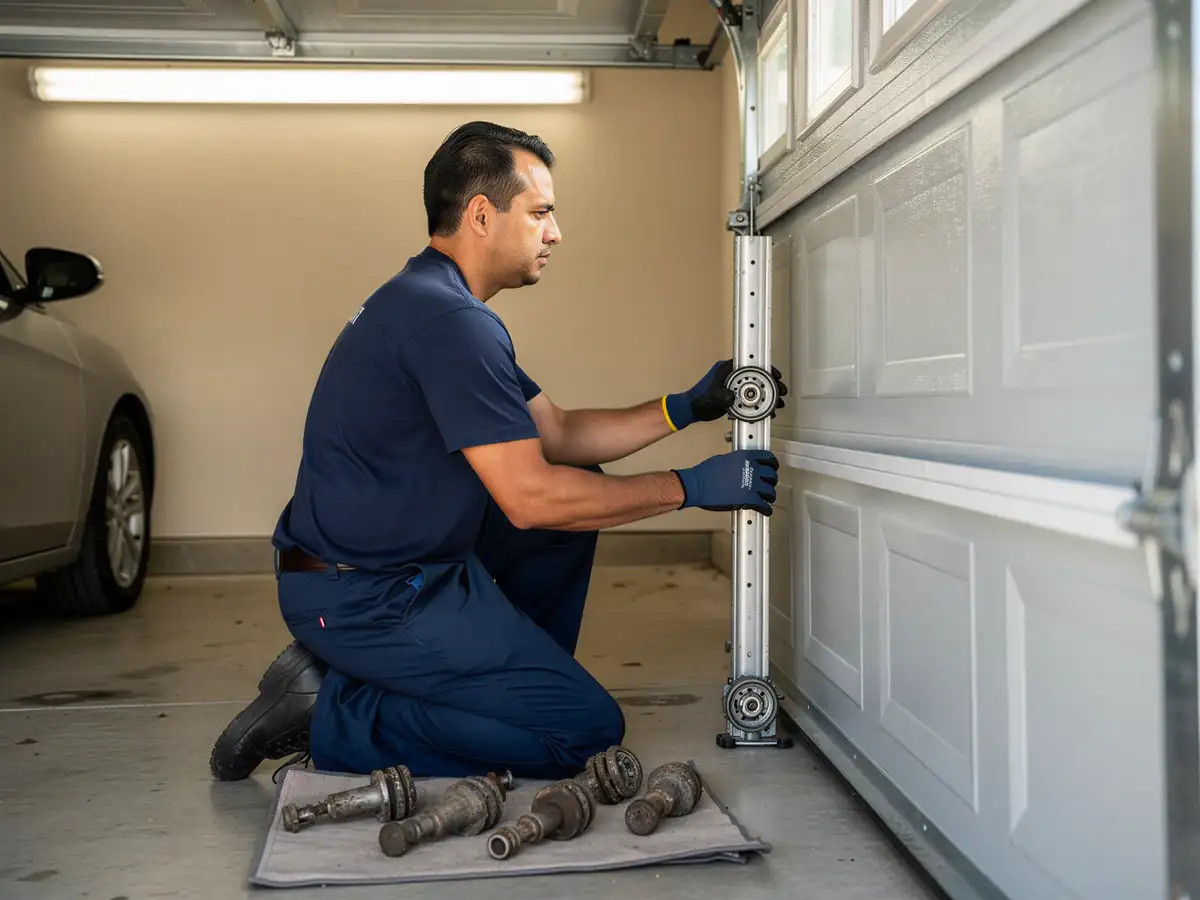
Most of the failures we get called out for here start the same way: a torsion spring that's been winding and unwinding since the house was built sometime in the 1985 range finally fatigues and snaps, usually on the coldest morning of the stretch when the metal's contracted a little and the door's heavier to lift. You'll hear it - a bang that sounds like a shelf fell - and then the door won't budge, or it slams down fast if you try to force it.
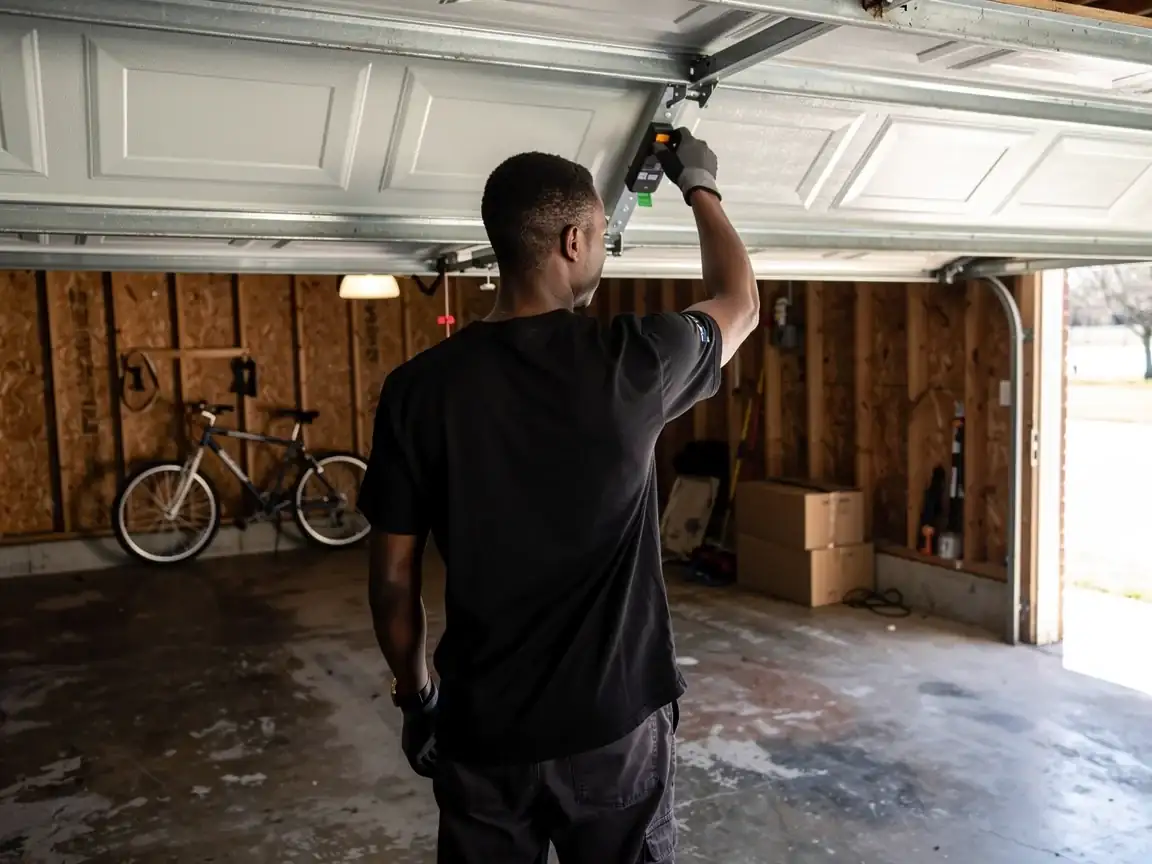
The other common one is the opener itself giving out, not the door. Gears strip, capacitors fail, and on a unit that old you often get intermittent behavior before the full stop - a door that opens some days and not others, or one that reverses halfway for no clear reason. Cable fraying on one side shows up as a door that drops crooked, catching one track before the other.
We don't see as much flood or storm damage here as you'd get closer to open water - this area doesn't sit on a floodplain we've been told about - so most of what comes in is wear, not weather.
Why It Happens Here
The housing stock in this part of the service area mostly went up in the 1980s and 90s, with a median build year right around 1985, and that one fact explains more service calls than anything else. Torsion springs are rated for a number of cycles, not a number of years, and a door that's been going up and down daily since the Reagan administration has used up its springs whatever shape the rest of the house is in.
Climate here is mild with occasional freezes, not the deep-freeze cycling you'd get further north, but even a handful of cold mornings a year is enough to stiffen grease on an old opener chain or tighten tolerances on a track that was already a little out of plumb. It's not dramatic weather damage - it's a slow accumulation that finally shows up as a dead stop on one particular morning.
With roughly 1,572 households in this stretch and a lot of them built in the same decade, we end up replacing a lot of the same spring sizes and the same discontinued opener models, which is part of why we try to diagnose by phone before the truck rolls.